


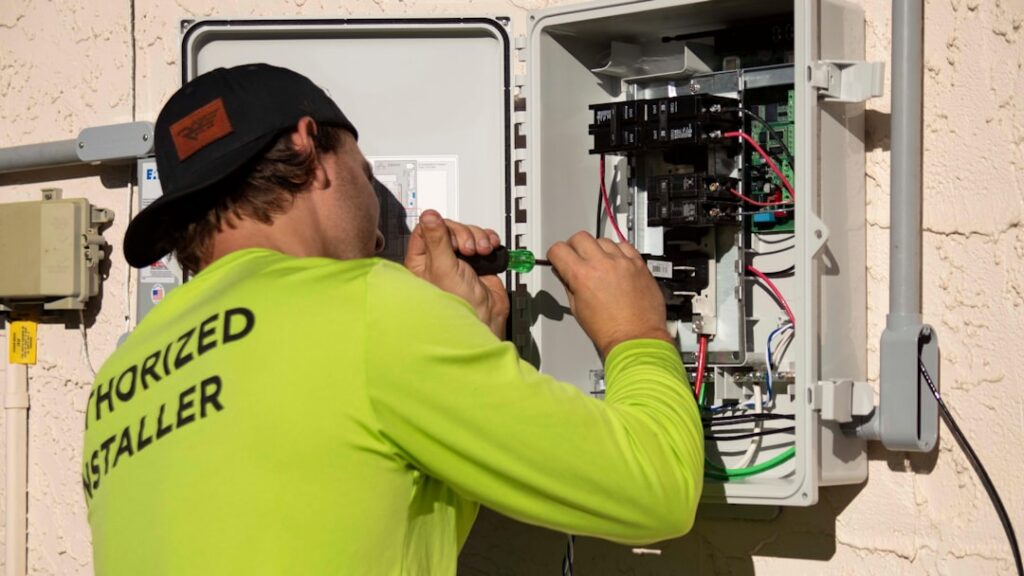
Why Knowing What to Look for When Hiring an Electrician Could Save Your Home
Knowing what to look for when hiring an electrician is one of the most important decisions a homeowner can make. Electrical malfunctions cause an estimated 24,000 residential fires every year in the United States, resulting in more than $1.5 billion in property damage annually. The difference between a safe home and a dangerous one often comes down to whether the person doing the electrical work was properly qualified.
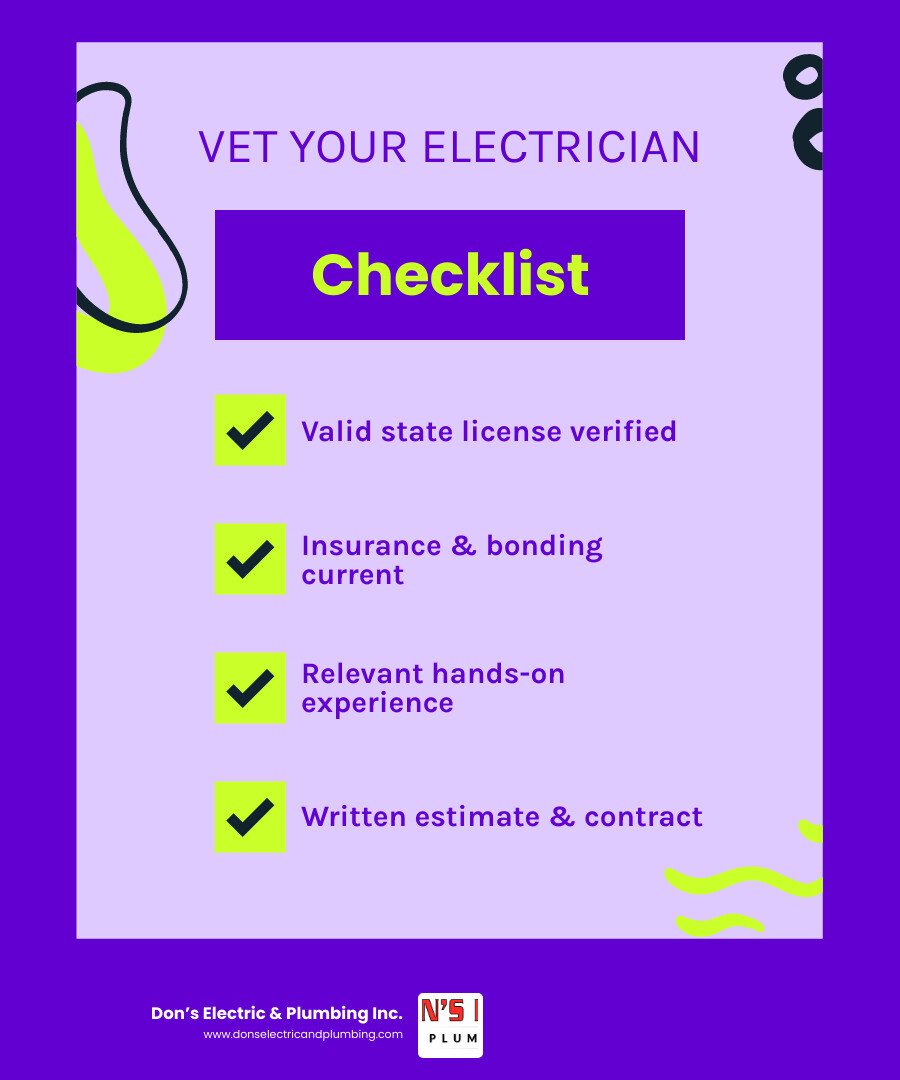
Here is a quick summary of what to look for when hiring an electrician:
- Valid state license – Verify the electrician holds an active license issued by your state’s licensing board
- Insurance and bonding – Confirm general liability insurance and workers’ compensation coverage are current
- Relevant experience – Choose someone with hands-on experience in the type of work your project requires
- Written estimate and contract – Never accept verbal-only pricing; get the full scope of work in writing
- Permit handling – A qualified electrician should pull all required permits and schedule inspections
- Strong local reviews – Check Google reviews and ask for references from recent, similar jobs
- Clear communication – The right electrician answers your questions directly and sets realistic timelines
- Warranty on work – Ask about labor warranties and how they handle any issues after the job is done
Whether you need a panel upgrade, new wiring, or an emergency repair, the checklist above gives you a starting point. The sections below go deeper on each of these factors so you can hire with confidence and protect your home.
Essential Credentials and Licensing: What to Look for When Hiring an Electrician
When it comes to the complex network of wires running behind your walls, there is absolutely no room for cutting corners. The very first criteria on your checklist must be verification of proper licensing and credentials. Electricity is incredibly unforgiving, and hiring an unlicensed individual is a gamble that simply is not worth the risk.
In the electrical industry, licensing is not just a piece of paper; it is proof that the technician has undergone thousands of hours of rigorous hands-on training, classroom instruction, and passed comprehensive exams testing their knowledge of safety protocols and regional building codes. Understanding Common Electrical Issues: Why You Legally Can’t Fix Everything is a great starting point for homeowners to realize where professional intervention becomes a legal and practical necessity.
Every reputable electrical contractor should confidently provide their license number upon request. Once you have this number, you should verify its status through your local municipal or state contractor licensing database to ensure it is active and free of unresolved disciplinary actions. Additionally, any major modification to your electrical system—such as adding new circuits, running outdoor power lines, or upgrading your electrical panel—will require municipal oversight. For a deeper look into when these rules apply, check out When You Need a Permit for New York Electrical Projects: A Guide.
Verifying State Licensing and Local Compliance
New York State has a unique approach to electrical licensing. Unlike states that issue a single statewide electrical license, New York largely regulates electrical licensing at the municipal, city, or county level. This means an electrical contractor must hold specific licenses or reciprocal agreements that authorize them to work within your particular county or town, whether you live in Montgomery County, Fulton County, or Schoharie County.
A qualified contractor must have a thorough understanding of local building codes and regional amendments. When a professional pulls a permit for your project, it triggers an official municipal inspection. This inspection acts as a vital safety net, confirming that the work meets the strict standards of the National Electrical Code (NEC). Skipping this process is incredibly risky. To understand the legal and safety ramifications of bypassing municipal channels, read about the Consequences of Electrical Work Without a Permit in New York.
Understanding the Difference Between Master and Journeyman Electricians
As you research what to look for when hiring an electrician, you will likely encounter the terms “Master Electrician” and “Journeyman Electrician.” These designations represent distinct tiers of experience, knowledge, and legal authority within the trade.
- Master Electricians have completed the highest level of training and field experience (typically requiring several years as a journeyman) and have passed a comprehensive exam covering advanced electrical theory, system design, and the National Electrical Code. They are qualified to design complex systems, plan large-scale projects, and pull the necessary building permits for a business.
- Journeyman Electricians are fully licensed professionals who can execute installations, troubleshoot issues, and perform repairs independently. However, they do not possess the legal authority to run an electrical contracting business or pull permits on their own without working under the umbrella of a Master Electrician.
- Apprentices are technicians in training. While they can perform hands-on work, they must always be supervised by a licensed Journeyman or Master Electrician on-site to ensure safety and compliance.
| Qualification / Capability | Apprentice | Journeyman Electrician | Master Electrician |
|---|---|---|---|
| Supervision Required | Yes (Direct, on-site) | No | No |
| Can Perform Repairs & Installs | Yes | Yes | Yes |
| Can Design Electrical Systems | No | No | Yes |
| Can Pull Municipal Permits | No | No | Yes |
| Typical Field Experience Required | Training phase | 4 to 5 Years | 7+ Years (plus advanced exams) |
Verifying Insurance, Bonding, and Safety Protocols

Licensing is only one half of the legal protection puzzle. The other crucial element is verifying that your chosen electrical contractor carries adequate insurance and bonding. If an uninsured individual is injured while working in your crawlspace, or if they accidentally cause a short circuit that damages your home’s electronics, you could be held financially liable.
Before allowing any work to begin, request a Certificate of Insurance (COI) sent directly from the contractor’s insurance provider. A reputable company will have no issue arranging this. To help keep your household safe while you vet contractors, we recommend reviewing The Ultimate Home Electrical Safety Checklist for Beginners.
Why Insurance and Bonding Protect Your Home
A professional electrical contractor should carry two primary types of insurance:
- General Liability Insurance: This protects your property and possessions. If an accident occurs—such as an electrical fire or structural damage caused by drilling—the contractor’s liability policy covers the cost of repairs and restoration.
- Workers’ Compensation Insurance: This covers medical expenses and lost wages if a technician is injured on your property. Without this coverage, a homeowner’s personal insurance policy could be targeted in the event of an on-site injury.
Additionally, you should confirm if the contractor is bonded. A surety bond provides financial security by guaranteeing that the contractor will complete the job in accordance with local laws and contractual agreements. If they abandon the project halfway through or perform subpar work that fails to meet code, the bond provides a pool of funds to hire another professional to correct the work.
Prioritizing Safety Standards and Code Compliance
Electrical work is inherently high-stakes. A professional contractor should demonstrate a deep commitment to the National Fire Protection Association (NFPA) standards, specifically NFPA 70, which is the benchmark for safe electrical design, installation, and inspection.
During your initial consultation, ask about their standard safety protocols. Do they install Ground Fault Circuit Interrupter (GFCI) protection in wet areas like kitchens, bathrooms, and basements as required by modern codes? Do they utilize Arc Fault Circuit Interrupter (AFCI) breakers to detect dangerous electrical arcing behind walls? These safety devices are critical for preventing shocks and electrical fires. For a closer look at why these details are so critical, read why Electrical Safety Issues Require Attention.
Evaluating Experience, Specializations, and Reputation
Just because someone is licensed to handle electrical wiring does not mean they are the right fit for your specific project. Some contractors focus almost entirely on commercial construction projects, while others specialize in residential service, troubleshooting, and smart home upgrades.
When evaluating potential candidates, look for a contractor with a proven track record in residential service. Residential homes present unique challenges, such as navigating older plaster walls, working within tight attic spaces, and diagnosing decades-old wiring systems. Familiarizing yourself with Don’t Get Zapped by These Old Wiring Warning Signs can help you identify when you need a specialist who understands how to safely update historical homes.
What to Look for When Hiring an Electrician for Complex Upgrades
If you are planning a major electrical project, you need a contractor with specialized experience in that area. Complex upgrades require precise load calculations to ensure your home’s electrical system can handle the new demand without overloading.
- Panel Upgrades: Upgrading from an outdated 100-amp service to a modern 200-amp panel requires coordinating with your local utility company to disconnect and reconnect power safely.
- EV Charger Installations: Installing a Level 2 electric vehicle charger requires dedicated 240-volt circuits and a careful assessment of your panel’s current capacity.
- Whole-Home Standby Generators: This involves installing automatic transfer switches and integrating backup power lines with your main service panel.
If you are experiencing issues like flickering lights, warm outlets, or a breaker that won’t stay reset, you need an experienced diagnostic technician. Learn more about these warning signs by reading Safety First: Understanding the Risks of a Repeatedly Tripping Breaker.
Vetting Online Reviews and Local References
In our digital age, online reviews are a goldmine of information. When researching local contractors, look for consistent patterns in client feedback rather than focusing on a single isolated review.
- Look for Reliability: Do reviews consistently mention that the technicians arrived on time, kept the workspace clean, and communicated clearly?
- Analyze Responses to Negative Feedback: A company’s professionalism is often reflected in how they handle complaints. Do they respond constructively and seek to resolve issues, or do they react defensively?
- Ask for Recent References: A reputable local contractor should gladly provide references from recent clients in your general area, whether you are located in Canajoharie, Broadalbin, or Sharon Springs.
Key Questions and Red Flags to Keep in Mind
Before signing any contract or agreeing to begin work, it is wise to treat your initial meeting with an electrical contractor like a job interview. A trustworthy professional will be happy to answer your questions and will provide clear, straightforward explanations without resorting to confusing jargon.
To help you spot potential hazards before they escalate, read our guide on Sniffing Out Trouble: How to Spot Dangerous Electrical Problems.
What to Look for When Hiring an Electrician to Handle Emergency Repairs
When an electrical emergency strikes—such as a smoking outlet, a complete loss of power to critical appliances, or water leaking into your electrical panel—you do not have time to conduct days of research. You need a reliable team that offers rapid, 24/7 emergency dispatch.
When hiring an emergency contractor, ensure they are fully equipped to handle immediate safety hazards on their first visit. They should prioritize isolating the danger, restoring temporary power safely, and scheduling permanent repairs as needed. To protect your family from immediate threats, familiarize yourself with Common Home Electrical Hazards and How to Avoid Them.
Warning Signs and Red Flags to Avoid
To protect your home and your wallet, be on the lookout for these common warning signs when vetting potential contractors:
- No Written Contract: If a contractor refuses to provide a detailed, written proposal outlining the exact scope of work, materials, timeline, and payment schedule, walk away. Verbal-only agreements offer zero legal protection.
- Refusing to Pull Permits: If a technician suggests skipping the permitting process to “save money” or asks you to pull the homeowner permit yourself, this is a major red flag. It usually indicates they are unlicensed, unbonded, or unwilling to have their work inspected by local authorities.
- Demanding Full Payment Upfront: Standard industry deposits typically range from 10% to 30% of the total project cost. Never work with someone who demands 100% of the payment before they turn a single screwdriver.
- High-Pressure Sales Tactics: Avoid contractors who pressure you to make immediate decisions or use scare tactics to upsell unnecessary services.
If you are tempted to try a quick fix yourself to avoid hiring a pro, please read Don’t Be a Hero and Call an Electrician for These Jobs to understand when DIY projects become incredibly dangerous.
Frequently Asked Questions About Hiring a Local Electrician
How do I verify if an electrician is licensed in New York?
Because New York regulates electrical licensing at the local municipal or county level rather than through a single state board, you should contact your local building department or code enforcement office. For example, if you live in Montgomery County or Fulton County, your local town or city clerk can confirm if a contractor holds an active local license and is registered to pull permits in your specific municipality.
Why should I avoid DIY electrical work?
DIY electrical work carries severe risks, including accidental electrocution, house fires, and code violations that can complicate future home sales. Additionally, if an unpermitted DIY electrical project causes a fire, your homeowner’s insurance policy may deny coverage for the damage. Hiring a licensed professional ensures the job is done safely, legally, and up to modern standards.
What is the difference between a journeyman and a master electrician?
A Journeyman Electrician is fully licensed to perform installations, troubleshooting, and repairs independently. A Master Electrician has completed several additional years of field experience, passed an advanced examination on electrical design and code compliance, and is legally authorized to run an electrical business, design complex systems, and pull municipal permits.
Conclusion
Finding the right residential electrical contractor does not have to be a stressful process. By focusing on the core essentials—verifying active local licensing, confirming robust liability and workers’ compensation insurance, looking for specialized residential experience, and insisting on clear, written contracts—you can protect your home, your family, and your investment.
At Don’s Electric & Plumbing Inc., we have been serving our neighbors across Montgomery, Fulton, Schoharie, Herkimer, and Hamilton counties since 1984. As a family-owned and operated business, we are proud to offer a 100% satisfaction guarantee, emergency dispatch services, and flexible financing options to keep your home safe, comfortable, and running efficiently.
Before you make your final hiring decision, we invite you to read our guide on how to Don’t Get Hammered by Choosing the Wrong Home Service Company to ensure you partner with a team that truly puts your safety first.