


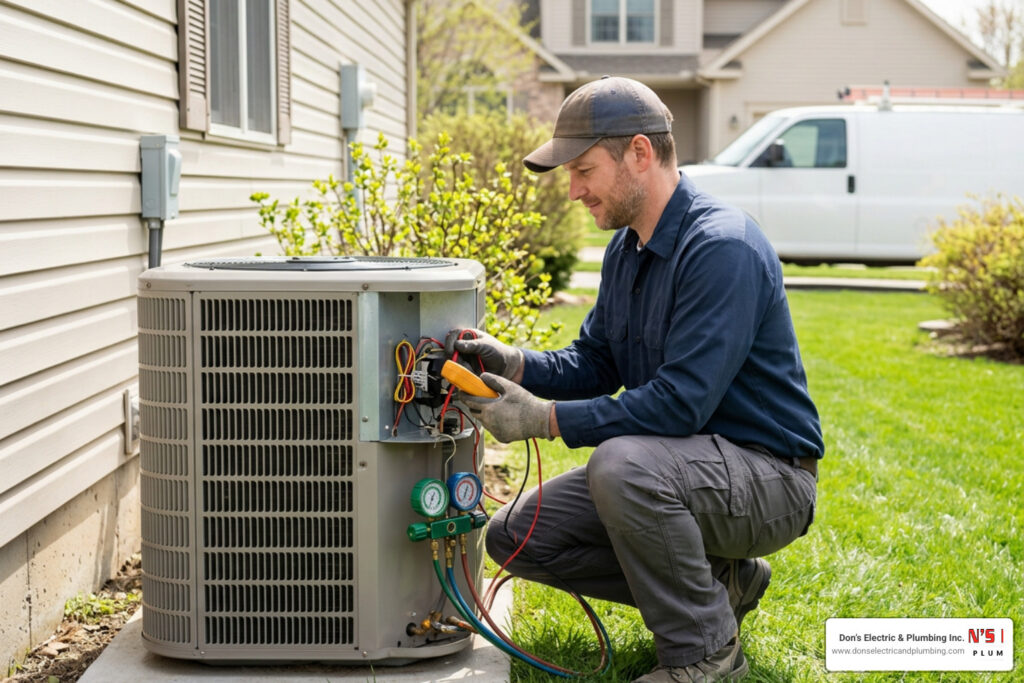
Why Spring Is the Most Important Season for Your HVAC System
The hvac tasks to do every spring listed below can mean the difference between a cool, comfortable summer and an expensive emergency breakdown on the hottest day of the year.
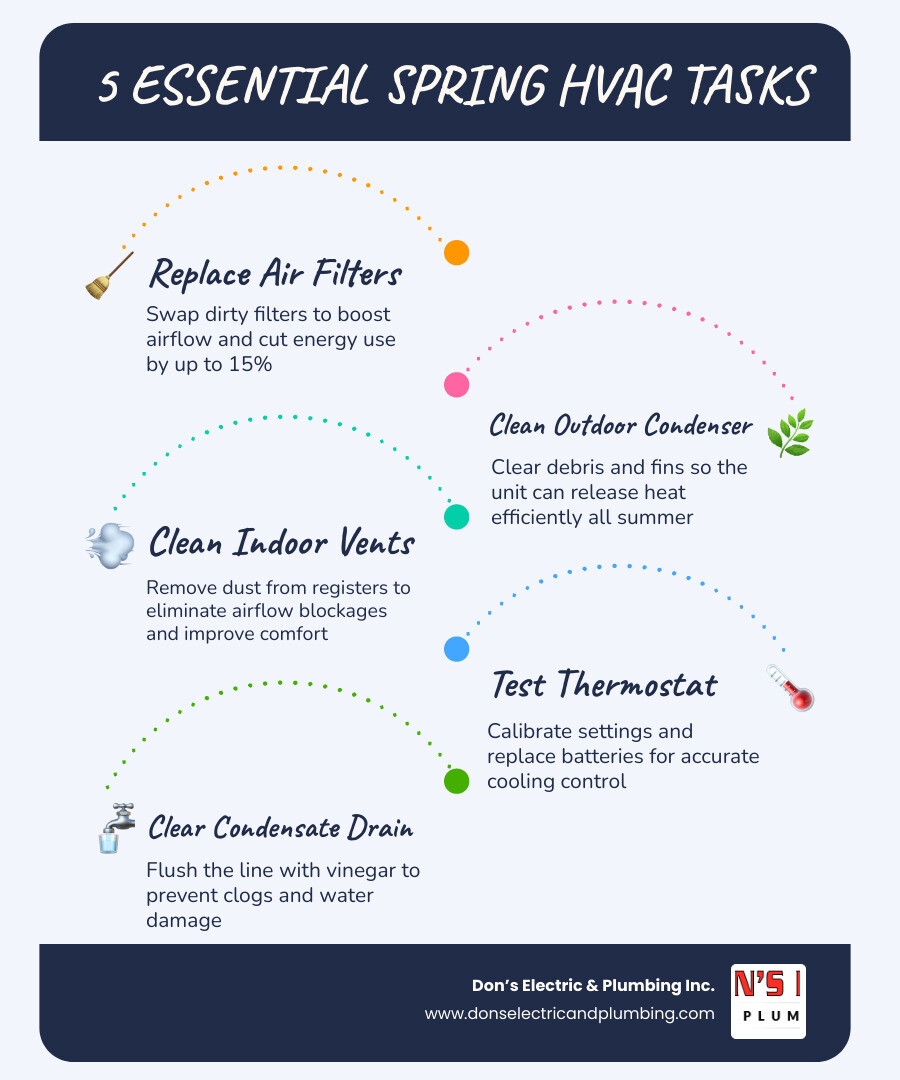
Here are the 5 essential HVAC tasks to do every spring:
- Replace your air filter
- Clear and clean around the outdoor condenser unit
- Clean indoor vents and registers
- Test and calibrate your thermostat
- Clear the condensate drain line
Most of these take under an hour and cost very little. Yet skipping them can push your system to work 15–25% harder, driving up energy bills and shortening its lifespan by years.
Think of it like an oil change for your car. A little attention in spring keeps your system running strong all summer — and helps you avoid the kind of mid-July breakdown that leaves you waiting days for a technician.
Spring is also the best time to catch small problems before they become big ones. A worn capacitor, a clogged drain line, or a dirty coil found in April is a quick fix. Found in August during a heat wave? That’s an emergency call.
Why You Need to Complete HVAC Tasks to Do Every Spring
When the winter snow finally melts across Montgomery, Schoharie, and Fulton counties, our minds naturally turn to spring cleaning, gardening, and enjoying the warmer weather. However, your heating, ventilation, and air conditioning (HVAC) system deserves a top spot on your seasonal to-do list. Neglecting seasonal maintenance is one of the most common mistakes homeowners make, and it can carry a steep price tag.
In fact, 95% of emergency summer repair calls could have been prevented with a simple spring tune-up. When your system sits dormant or runs in heating mode all winter, dust, debris, and wear accumulate. Transitioning straight into the heavy cooling loads of summer without proper preparation is a recipe for system failure.
Proactive spring maintenance directly impacts three key areas of homeownership:
- Energy Efficiency and Utility Bills: A neglected HVAC system can run 15% to 25% less efficiently. Over a typical five-month cooling season, this inefficiency can easily translate to $115 to $190 in unnecessary energy costs on your monthly utility bills.
- System Lifespan: Your air conditioner is a major investment. Systems with documented annual maintenance last 18 to 22 years on average. Without regular upkeep, that average drops to just 11 to 14 years. Taking care of your system now protects your investment for the long haul.
- Preventing Catastrophic Failures: A simple, low-cost preventive tune-up in the spring can save you from reactive repairs later in the year, such as a failed compressor which can cost thousands of dollars to replace.
Understanding the benefits of regular ac maintenance can help you see why a small amount of effort in April or May pays off so handsomely in July and August.
To visualize the difference seasonal care makes, consider how a maintained system stacks up against a neglected one:
| Performance Metric | Maintained HVAC System | Neglected HVAC System |
|---|---|---|
| Average Lifespan | 18–22 years | 11–14 years |
| Operating Efficiency | Peak performance (saves 15–25% on bills) | Degraded (wastes $115–$190 per season) |
| Risk of Summer Breakdown | Very low (under 5%) | High (responsible for 95% of emergency calls) |
| Airflow Quality | Clean, unrestricted, and healthy | Restricted, dusty, and allergen-heavy |
| Warranty Status | Fully protected (manufacturer requirements met) | Risk of voided warranty due to neglect |
5 Essential Spring HVAC Tasks for Homeowners
To ensure your home remains a cool sanctuary when the summer humidity rolls into Upstate New York, we have compiled a straightforward seasonal checklist. These five DIY maintenance steps focus on airflow optimization, cleanliness, and system testing. They are designed to be completed by homeowners in an afternoon, requiring only basic household tools.
1. Replace Air Filters: The Easiest HVAC Tasks to Do Every Spring
If you only do one thing for your air conditioner this spring, let it be this. Replacing your air filter is the single most effective DIY task to maintain system health, preserve indoor air quality, and keep your utility bills low.
Over the winter, your heating system recirculates indoor air, trapping pet dander, dust, lint, and pollen. By the time spring arrives, that filter is likely clogged. A dirty, clogged filter restricts airflow, forcing your blower motor to work twice as hard to push air through your home. This extra strain can cause the evaporator coil to freeze over, potentially leading to a complete system shutdown or blower motor failure.

Understanding MERV Ratings
When shopping for a replacement filter, pay attention to the Minimum Efficiency Reporting Value (MERV) rating, which measures how effectively the filter traps particles:
- MERV 1–4: Basic filters that capture large particles like lint and dust bunnies. They offer minimal protection for your indoor air quality.
- MERV 8–11: The sweet spot for most residential homes. These filters capture pollen, mold spores, pet dander, and dust mites without restricting your system’s airflow.
- MERV 13+: High-efficiency filters designed to trap bacteria, smoke, and microscopic allergens. Be careful: unless your HVAC system is specifically designed to handle the high resistance of these thick filters, they can restrict airflow and cause damage.
By replacing a dirty filter with a clean one, you can see a 5% to 15% reduction in energy consumption. For more details on boosting your system’s performance, check out these simple and easy tips to improve your hvac systems efficiency.
2. Clear and Clean Around the Outdoor Condenser Unit
Your outdoor condenser unit is responsible for releasing the heat captured from inside your home out into the open air. To do this effectively, it needs a continuous, unobstructed supply of fresh air.
During our windy Upstate New York autumns and snowy winters, leaves, twigs, grass clippings, and debris pile up around the base of this unit. Nearby shrubs, weeds, and branches can also grow out of control, blocking the delicate metal grilles (condenser fins) that line the sides of the unit.
How to Safely Clean Your Outdoor Unit:
- Shut Off the Power: For safety, locate the outdoor electrical disconnect box near the unit and pull the plug or flip the switch to “off.”
- Clear the Area: Remove all leaves, weeds, and debris from the base of the unit. Maintain at least a two-foot clearance radius on all sides of the condenser, and trim back any overhanging tree branches or nearby bushes.
- Gently Clean the Fins: Use a soft-bristled brush or a vacuum with a brush attachment to remove loose dirt and grass from the exterior fins.
- Rinse with a Garden Hose: Direct a gentle spray from a standard garden hose through the fins from the inside out to wash away trapped grime.
Warning: Never use a pressure washer on your outdoor unit. The high-pressure stream will instantly bend and crush the delicate aluminum condenser fins, permanently restricting airflow and ruining your system’s ability to shed heat.
3. Clean Indoor Vents and Registers
While the outdoor unit handles heat rejection, your indoor vents and registers manage the distribution of cool air. Over time, household dust, pet hair, and cobwebs settle on the metal grilles of your supply registers (where cool air blows out) and return vents (where air is drawn back in).
Clogged registers act like closed doors, blocking airflow and creating uneven temperatures throughout your home. Furthermore, whenever your system kicks on, it can blow that accumulated dust right back into your living spaces, aggravating seasonal allergies.
Step-by-Step Vent Cleaning:
- Turn off your HVAC system at the thermostat.
- Use the brush attachment of your vacuum cleaner to clear away dust from all ceiling, wall, and floor registers.
- For grilles with heavy buildup, remove the mounting screws, wash the grilles in warm, soapy water, dry them completely, and reinstall them.
- Ensure that furniture, drapes, rugs, and toys are not blocking any supply or return vents.
While cleaning your vents, take a look at the visible sections of your ductwork in your basement or attic. The average home loses 20% to 30% of its conditioned air through small duct leaks and unsealed joints. If you spot loose joints, sealing them with foil tape (not standard duct tape) can significantly boost your comfort. For a deeper dive into preparing your home, read our guide on pre-summer hvac maintenance tips.
4. Test and Calibrate Your Thermostat
Your thermostat is the brain of your entire HVAC system. If it is inaccurate, dirty, or losing battery power, your system will cycle incorrectly, leading to poor comfort and wasted energy. Spring is the perfect time to give it a quick checkup before you rely on it daily.
How to Test and Calibrate Your Thermostat:
- Replace the Batteries: If your thermostat uses batteries, replace them every spring. A dead battery during a summer heat wave can leave you without air conditioning when you need it most.
- Clean the Interior: If you have an older mechanical thermostat, gently remove the cover and blow away dust with a can of compressed air. Dust buildup can cause the sensor to read temperatures incorrectly.
- Verify Accuracy: Hang a reliable glass or digital thermometer next to your thermostat. After 15 minutes, compare the readings. If they differ by more than a degree or two, your thermostat may need professional calibration or replacement.
- Run a Cooling Test: Switch your thermostat to “Cool” mode and set the temperature five degrees below the current room temperature. Listen for the indoor blower to start and verify that cool air begins blowing from the vents within a few minutes.
If you are still using an old, non-programmable thermostat, consider upgrading to a smart thermostat. This simple change can cut your annual cooling costs by up to 10% by automatically adjusting temperatures when you are away from home.
5. Clear the Condensate Drain Line
As your air conditioner cools your home, it also dehumidifies the air. The moisture extracted from your indoor air condenses on the cold evaporator coil and drips down into a drain pan. From there, it flows out of your home through a plastic condensate drain line.
Because this line is constantly warm and damp, it is a breeding ground for algae, mold, and slime. Over the winter, this buildup can dry out and form a tough clog. When you turn on your AC in the summer, the condensation has nowhere to go, causing the drain pan to overflow. This can result in costly water damage to your ceilings, walls, and floors, or cause your system to shut down automatically if it has a safety float switch.
How to Flush Your Drain Line:
- Locate the condensate drain line access point (usually a T-shaped PVC pipe near your indoor evaporator coil).
- Remove the cap and pour one cup of regular distilled white vinegar down the line. The natural acidity of the vinegar will kill algae and mold buildup.
- Let it sit for 30 minutes, then flush the line with a gallon of warm water to ensure it flows freely to the outside drain.
Regularly flushing this line is a simple way to avoid major headaches. To learn more about keeping your system running smoothly, read about hvac dont common mistakes to avoid.
DIY vs. Professional Maintenance
While the five tasks outlined above are excellent ways for homeowners to keep their systems clean and efficient, DIY maintenance has its limits. Your HVAC system is a complex combination of high-voltage electricity, pressurized refrigerant, sensitive electronic controls, and mechanical parts.
For safety and system longevity, certain tasks should only be completed by a licensed, certified HVAC technician.
The DIY/Professional Split: Who Does What?
To help you understand where to draw the line, here is a quick breakdown of responsibilities:
- Homeowner DIY Tasks: Replacing air filters, clearing outdoor debris, dusting vents, testing thermostat batteries, and flushing the condensate line with vinegar.
- Licensed Technician Tasks: Testing electrical capacitors, measuring refrigerant levels, inspecting safety controls, cleaning indoor evaporator coils, and performing combustion analysis on heating components.
Why Professional Tune-Ups Outperform DIY HVAC Tasks to Do Every Spring
A professional spring tune-up goes far beyond basic cleaning. When a certified technician services your system, they use specialized diagnostic tools to evaluate performance and catch hidden issues before they cause a breakdown.
For example, a technician will measure the electrical capacitance of your system’s capacitors. Capacitors act like temporary batteries, providing the high-voltage boost needed to start your compressor and fan motors. Our freezing, damp Upstate New York winters can cause internal corrosion in these components. A weak capacitor can still run the system, but it forces the motors to run hot, eventually burning them out. Catching a weak capacitor in the spring prevents a sudden system failure in July.
Technicians also check your system’s refrigerant charge. An air conditioner with low refrigerant will struggle to cool your home, run continuously, and potentially destroy the compressor. Since refrigerant operates in a closed loop, low levels always indicate a leak that must be located and repaired by a professional.
During a professional visit, our technicians also thoroughly clean the indoor evaporator coil, which is often difficult to access and easily damaged by DIY attempts. To see what a comprehensive professional checkup involves, take a look at our hvac maintenance check list residents guide.
Red Flags That Require Immediate Professional Attention
As you complete your spring DIY tasks, keep an eye out for these warning signs. If you notice any of these red flags, do not attempt to fix them yourself—shut down your system and call a professional immediately:
- Ice on the Refrigerant Lines: Ice buildup on the copper lines running to your outdoor unit or on the indoor evaporator coil indicates a serious airflow blockage or a refrigerant leak. Running the system with ice can destroy the compressor.
- Unusual Noises: Squealing, grinding, rattling, or loud banging noises when the system starts or runs indicate loose components, failing bearings, or a damaged blower wheel.
- Warm Air Blowing from Vents: If your AC is running but blowing warm or lukewarm air, you could have a failed compressor, a refrigerant leak, or a faulty return duct pulling hot air from your attic.
- Frequent Short-Cycling: If your system turns on and off every few minutes without completing a full cooling cycle, it is short-cycling. This places extreme wear on the compressor and is often caused by electrical issues or overheating.
If your system is older and experiencing frequent breakdowns, it may be time to consider whether to repair or replace it. Our guide on hvac longevity when to say goodbye to your old unit can help you make an informed decision.
Frequently Asked Questions About Spring HVAC Prep
When is the best time to schedule professional spring HVAC maintenance?
The ideal time to schedule your professional spring tune-up is in early spring—specifically March or April.
Scheduling early offers several advantages:
- Technician Availability: HVAC companies are flooded with emergency calls during the first heat wave of summer. Booking in early spring ensures you get an appointment time that fits your schedule, without long wait times.
- Pre-Season Corrections: If the technician discovers a worn part during a cool April morning, it can be ordered and replaced before you actually need to turn on the cooling system.
- Peace of Mind: Your system will be fully prepared and tested before the hot, humid summer days arrive.
For more answers to common homeowner questions, visit our comprehensive hvac system faq.
How does spring maintenance differ for central air, ductless units, and heat pumps?
While the general principles of cleanliness and airflow apply to all systems, different HVAC setups require unique care:
- Central Air Conditioning: Focuses heavily on the outdoor condenser unit, the indoor evaporator coil housed in your furnace cabinet, and the extensive ductwork network running through your home.
- Ductless Mini-Split Systems: These systems do not use ducts, so maintenance focuses on cleaning the individual air filters inside each wall-mounted indoor unit and ensuring the outdoor multi-zone compressor is clear of debris.
- Heat Pumps: Unlike standard air conditioners that sit idle all winter, heat pumps run year-round to provide both heating and cooling. Because they work double duty, heat pumps require professional maintenance twice a year—once in the spring before the cooling season, and once in the fall before the heating season.
To prepare your system for the changing seasons, consult our guide on what should be on your end of the year hvac maintenance checklist.
What should I expect during a professional spring tune-up?
A reputable HVAC contractor should provide a comprehensive, multi-point service that goes far beyond a quick visual inspection. When you book a professional spring tune-up, you should expect the technician to:
- Thoroughly clean both the indoor evaporator coil and the outdoor condenser coil.
- Check and tighten all electrical connections and measure voltage and amperage on motors.
- Measure the system’s refrigerant charge and inspect for leaks if levels are low.
- Test and calibrate your thermostat to ensure accurate operation.
- Inspect and clear the condensate drain line and test any safety overflow switches.
- Measure the temperature split across the indoor coil to verify proper cooling performance.
- Provide you with a detailed, written report of their findings, including performance measurements and recommendations.
Conclusion
Taking the time to complete these essential spring HVAC tasks is the best way to ensure your home remains cool, efficient, and comfortable all summer long. While simple DIY steps like replacing your air filter and clearing debris from your outdoor unit make a significant difference, they cannot replace the precision of a professional tune-up.
At Don’s Electric & Plumbing Inc., we have been keeping homes comfortable across Montgomery, Schoharie, Fulton, Herkimer, and Hamilton counties since 1984. As a family-owned and operated business based in Canajoharie, NY, we take pride in delivering honest, reliable service backed by our 100% satisfaction guarantee. Whether you need a routine spring tune-up, a system upgrade, or emergency service, our team is always ready to help.
Don’t wait for the first summer heat wave to find out if your air conditioner is up to the task. Safeguard your comfort, lower your utility bills, and enjoy peace of mind by scheduling your seasonal maintenance today. Explore our hvac maintenance plan cobleskill ny to see how we make year-round system care simple and worry-free.