


The November Chill: Preparing Your Garage Plumbing for the Deep Freeze
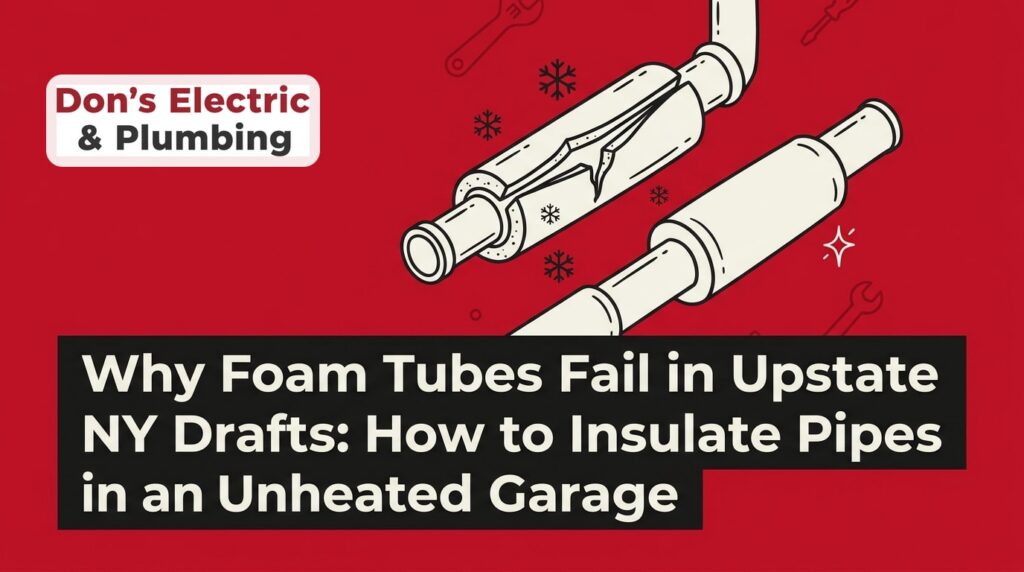
Late fall brings a stark and sudden warning to the Northeast. At Don’s Electric & Plumbing, our team sees the aftermath every year when the first heavy frost hits, as many homeowners realize they need to figure out exactly how to insulate pipes in an unheated garage before the real cold settles in. By pre-winter November, those rapid overnight temperature drops transform a chilly, functional workspace into a high-risk zone for your exposed plumbing. Standard slit-foam tubes might seem like an easy, quick fix when you are rushing through a weekend project, but we routinely see them fail when subjected to the extreme drafts and plunging temperatures of an unattached structure.
Choosing between cheap, temporary foam that leaves vulnerable gaps and proper cold-weather winterization is a critical decision for any homeowner. A burst pipe in a freezing garage can unleash hundreds of gallons of water, causing devastating structural damage before you even realize there is a leak. Protecting these exposed lines requires a comprehensive approach that blocks drafts and traps heat. For foundational guidance on protecting your home’s water lines, reviewing professional plumbing repair tips is an excellent starting point. However, if a sudden freeze has already compromised your system and water is actively pooling, you need emergency plumbing repair immediately to stop the destruction.
The transition from autumn to deep winter happens fast. One day the garage is perfectly manageable, and the next, the concrete floor is radiating cold while frigid air pushes through every crack in the overhead door. Understanding why standard hardware store insulation falls short is the first step in genuinely securing your property against the inevitable freeze.
The Thermodynamics of a Drafty Garage in Extreme Cold
Understanding exactly why pipes burst requires looking closely at the science of freezing water and heat loss. An unheated garage does not just get cold; it actively pulls heat away from everything inside it. In our years of providing plumbing solutions across Canajoharie NY and the broader Mohawk Valley, we know firsthand that our region experiences prolonged periods well below freezing. This regional climate fundamentally changes how pipes react compared to southern or moderate climates, making standard winterization methods wildly inadequate.
The Physics of Freezing Water
When the temperature of the water inside your pipes drops below 32 degrees Fahrenheit, a dangerous physical reaction begins. As water turns to ice, it expands by roughly 9 percent. This expansion creates thousands of pounds of pressure per square inch. Contrary to popular belief, the pipe usually does not burst exactly where the ice blockage forms. Instead, the expanding ice acts like a piston, pushing the remaining liquid water toward a closed faucet or valve. With nowhere to go, the trapped water pressure spikes until the copper or PVC wall simply tears open.
How Drafts Accelerate Heat Loss
Insulation does not generate heat; it only slows down the transfer of heat. In an unheated garage, the ambient temperature can drop to match the outside air within just a few hours. When you add wind chill to the equation, the situation becomes critical.
| Garage Condition | Heat Loss Mechanism | Impact on Exposed Pipes |
|---|---|---|
| Sealed but Unheated | Radiant cooling through walls and concrete floor. | Slow, gradual temperature drop. Pipes may survive a brief overnight freeze. |
| Drafty Overhead Door | Convective cooling from freezing air currents. | Rapid heat stripping. Wind constantly removes any residual warmth from the pipe surface. |
| Unsealed Penetrations | Direct drafts hitting localized pipe sections. | Spot-freezing. Ice blocks form quickly at the exact point where the draft hits the pipe. |
When high winds push through an unsealed garage door, they create a convective cooling effect that bypasses basic insulation. The moving air continuously strips away any residual warmth radiating from the home’s shared wall, forcing the water lines to freeze much faster than they would in still air.
The False Security of Standard Slit-Foam Pipe Tubes
Walk down any hardware store aisle in late fall, and you will see bins full of inexpensive, dark gray slit-foam pipe tubes. These products are incredibly popular because they are cheap and easy to snap onto a straight run of copper. However, our plumbers will tell you that relying on them in Upstate New York is a massive gamble. These basic tubes are engineered for moderate climates to prevent condensation on cold water lines or to keep hot water lines warm in a basement—they are not designed to stop a hard freeze in a drafty outbuilding.
The Vulnerability of Elbows and Joints: Standard foam is rigid. When your plumbing turns a corner at a 90-degree elbow or splits at a T-joint, the foam cannot bend. We frequently find that DIY installations involve attempting to cut angles into the foam, which almost always leaves a half-inch gap of bare copper exposed to the freezing air. In extreme cold, that tiny exposed section is all it takes for an ice block to form.
Shrinkage and Adhesive Failure: As temperatures plummet, cheap foam actually contracts. Even if you push two tubes tightly together in October, by pre-winter November, the cold will cause them to shrink, opening up a gap right in the middle of a straight pipe run. Furthermore, the self-sealing adhesive strips on these tubes frequently fail in freezing temperatures, causing the tube to pop open and expose the pipe entirely.
Bypassed by Wind Chill: Because slit-foam does not create an airtight seal around the pipe, high winds and frigid air currents in a drafty garage simply blow right through the slits and gaps. The cold air circulates between the foam and the pipe, rendering the insulation entirely useless. Ignoring these gaps is a pattern we see often, and it is one of those plumbing issues you should never ignore, as it inevitably leads to a flooded garage.

A Better Approach: Heavy-Duty Pipe Wrapping Materials
If standard foam is destined to fail during a prolonged Upstate New York freeze, homeowners must pivot to professional-grade materials. True cold-weather protection requires heavier insulation with a higher R-value, paired with an impermeable vapor barrier. At Don’s Electric & Plumbing, we recommend upgrading your materials before the first freeze as the only reliable way to protect exposed lines.
- Fiberglass Pipe Wrap: Unlike rigid foam, fiberglass wrap comes in rolls and is highly flexible. This allows you to wrap it tightly around complex elbows, valves, and T-joints without leaving a single millimeter of bare metal exposed. The dense fiberglass fibers trap air much more effectively, providing a superior buffer against the cold.
- Seamless Vapor Barriers: Fiberglass alone can absorb moisture, which ruins its insulating properties. Heavy-duty wraps must be covered with a tight plastic vapor barrier or specialized foil tape. This outer layer serves a dual purpose: it keeps moisture out and physically blocks frigid wind currents from penetrating the insulation layer.
- Thicker R-Values: The R-value measures a material’s resistance to heat flow. Standard foam often has an R-value of barely 2.0. For an unheated garage facing multi-day freezes, you need significantly thicker insulation to slow the heat loss enough to survive the night. Layering proper wraps achieves this necessary thickness.
- Complete Coverage: The golden rule of pipe insulation in extreme environments is that coverage must be absolute. A pipe wrapped perfectly for 20 feet but left bare for two inches near a wall penetration is still going to freeze and burst at that two-inch mark.
Applying these materials requires patience and attention to detail. Every overlap must be tight, and every joint must be secured. While the general concept is straightforward, ensuring complete, airtight coverage in cramped garage corners often requires a meticulous touch.
The Critical Role of Air-Sealing and Draft Mitigation
Even the highest-quality, heavy-duty pipe wrap will struggle to protect your plumbing if it is constantly battered by zero-degree winds. Insulation works synergistically with the surrounding environment. If you allow frigid air currents to flow freely through your unheated garage, you are severely compromising the effectiveness of your pipe wrapping. True winterization requires neutralizing the drafts.
- Seal the Overhead Garage Door: The largest source of cold air in any garage is the main overhead door. The bottom rubber seal often cracks, flattens, or rots over time, leaving a massive gap for freezing winds to sweep across the floor. Replacing this bottom seal and installing weatherstripping along the sides and top of the door is mandatory for draft mitigation.
- Caulk Exterior Wall Penetrations: Inspect the exterior walls of the garage, paying special attention to where plumbing lines, electrical conduits, or HVAC components enter or exit the building. Any gap around these penetrations acts like a wind tunnel, blasting cold air directly onto the pipes hidden inside the wall cavity. Fill these gaps with exterior-grade silicone caulk or expanding foam.
- Weatherstrip Garage Windows and Man-Doors: If your garage has standard windows or a side entry door, treat them just like the ones inside your house. Drafty window sashes and worn door sweeps let in a constant stream of cold air. Apply fresh foam weatherstripping to the frames to lock out the wind.
- Address the Chimney Effect: Garages with unsealed attic hatches or open roof vents can create a chimney effect, pulling cold air in through the bottom of the garage and venting it out the top. Ensuring the ceiling plane is reasonably sealed helps stabilize the ambient temperature around your exposed plumbing.
By stopping the wind chill, you allow the heavy-duty pipe wrap to do its job effectively. The insulation only has to fight the ambient cold, rather than battling a constant, heat-stripping breeze.
Winterizing Exterior Connections and Dedicated Garage Lines
Garages often serve as the hub for exterior water connections, utility sinks, and dedicated hose bibs. These specific fixtures are inherently vulnerable because they often sit right on the boundary between the relatively sheltered garage interior and the harsh Upstate New York winter outside. Preparing these lines by pre-winter November is critical.
Managing Frost-Free Hose Bibs
Many modern homes feature frost-free hose bibs on the exterior of the garage. These devices work by placing the actual water shut-off valve deep inside the wall cavity, away from the freezing exterior air. The long metal stem remains empty when the water is turned off. However, this entire mechanism is defeated if you leave a garden hose attached. The hose traps water inside the stem, which then freezes, expands, and splits the hidden copper pipe inside your wall. You must prioritize disconnecting frost-free hose bibs before the temperature drops.
Draining Dedicated Garage Sinks
If you have a utility sink in your unheated garage, insulating the exposed supply lines might not be enough during a severe, multi-day deep freeze. The safest approach for dedicated garage plumbing that will not be used during the winter is to shut off the water supply to those specific lines from inside the heated main house. Once the interior shut-off valve is closed, open the faucets on the garage sink to drain any remaining water out of the pipes. Stagnant water in an unheated space is always the first to freeze, so removing the water entirely eliminates the risk.
When to Rely on Professional Plumbing Protection
While wrapping accessible pipes and weatherstripping doors are excellent proactive steps, some garage plumbing configurations are simply too complex or dangerous for DIY methods. If your water lines are tucked tightly against exterior concrete walls, routed through inaccessible ceiling joists, or connected to sensitive water filtration equipment, standard wrapping may not be possible.
In these high-risk scenarios, professional-grade heat trace cables are often required. Heat trace tape actually generates a controlled amount of warmth to keep the pipe above freezing. However, installing heat tape is not a casual weekend project. It involves electricity and water in close proximity. Improperly installed heat tape is a known fire hazard and can easily violate local building codes. Installation requires a licensed professional to ensure the system is grounded, thermostatically controlled, and perfectly safe.
As a local, family-owned business, our team at Don’s Electric & Plumbing has firsthand experience repairing catastrophic winter water damage caused by inadequate DIY winterization in Canajoharie NY. We see the aftermath of cheap foam tubes and improperly applied heat tape every January. A comprehensive pre-winter plumbing inspection can identify hidden vulnerabilities in your garage and crawlspaces that you might overlook. Investing in professional winterization gives you the peace of mind that your home is genuinely protected. If you need an expert assessment or want to upgrade your home’s defenses, scheduling residential plumbing repair in Salsbury and the surrounding areas ensures your system is ready for whatever the winter weather brings.
Frequently Asked Questions About Garage Pipe Winterization
Will pipes freeze in an unheated garage?
Yes, pipes are highly susceptible to freezing in an unheated garage. Because the space lacks a dedicated heat source, the ambient temperature can quickly drop below freezing during a cold snap. If the pipes are uninsulated or exposed to drafts, the standing water inside them will freeze and expand, leading to burst pipes.
What is the best insulation for pipes in a garage?
Heavy-duty fiberglass pipe wrap paired with an airtight vapor barrier is the best choice for extreme cold. Unlike standard rigid foam tubes, fiberglass can be wrapped tightly around elbows, T-joints, and valves without leaving gaps. The vapor barrier then seals out moisture and completely blocks frigid wind currents from stripping heat away from the pipe.
How do you keep water pipes from freezing in an unheated garage?
The most effective strategy is a combination of heavy-duty pipe wrapping and aggressive draft mitigation. You must insulate the pipes completely, ensuring no bare metal is exposed at the joints. Simultaneously, you must seal the garage by weatherstripping the overhead door and caulking exterior wall penetrations to stop wind chill from bypassing the insulation.
Does pipe insulation stop freezing completely?
Insulation does not generate heat; it only significantly slows down the transfer of heat from the pipe to the surrounding cold air. During a prolonged, multi-day deep freeze, even well-insulated pipes in an unheated space can eventually freeze if no water is flowing. For extreme climates, insulation must be paired with draft sealing or professional heat trace cables.
At what temperature should I worry about garage pipes freezing?
You should take action before outside temperatures drop to 20 degrees Fahrenheit. While water freezes at 32 degrees, it typically takes a sustained drop into the low 20s to penetrate the walls of a garage and freeze the water inside the plumbing lines. However, if your garage is highly drafty, wind chill can cause freezing much closer to the 32-degree mark.
Can I use a space heater instead of insulating garage pipes?
Relying on a space heater is dangerous, inefficient, and highly unreliable. Space heaters are a major fire hazard when left unattended in a garage filled with combustible materials. Furthermore, if the power goes out during a winter storm, the heater fails immediately, leaving your uninsulated pipes completely defenseless against the cold.