


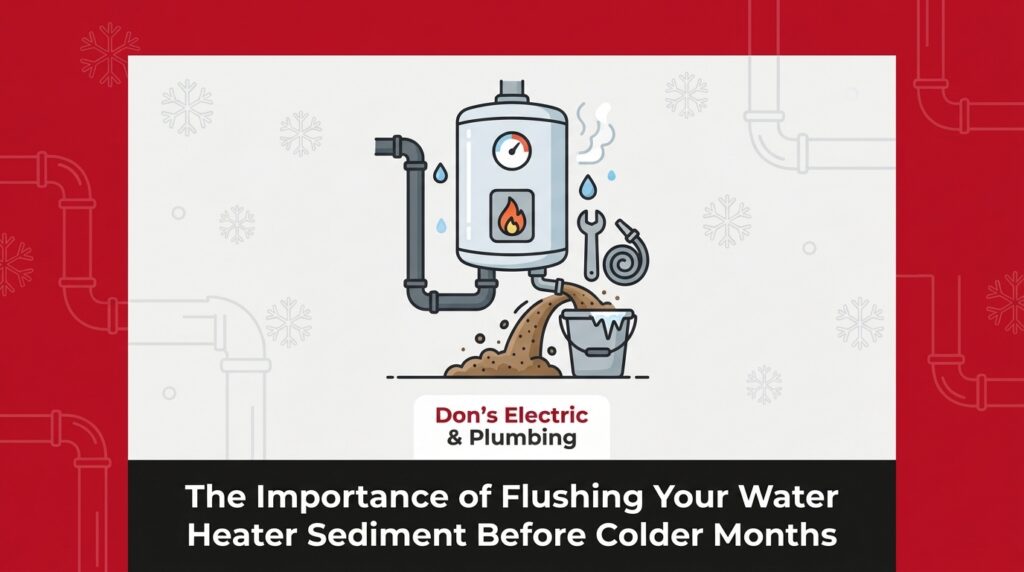
The Hidden Winter Threat to Your Home’s Hot Water Supply
Understanding the importance of flushing your water heater sediment before colder months is critical when September mornings start carrying that unmistakable Upstate New York chill. The transition from summer to fall brings a significant drop in outdoor temperatures, and that weather shift directly impacts the water entering your home from municipal pipes. Right now, your water heater is preparing to face its most demanding season of the year.
The concrete problem lies at the bottom of your tank. Over the past year, sediment has steadily accumulated, creating a dense, rock-like layer. This buildup acts as a powerful thermal insulator, trapping heat away from the water. As incoming water temperatures plummet, that insulating barrier forces your water heater to work twice as hard just to reach your normal shower temperature. You are currently at a critical decision point: schedule a proactive professional flush now, or risk a complete system failure during the peak of winter.
Taking action during the September / early fall pre-heating season is the smartest move a homeowner can make. If you want to protect your equipment and avoid waking up to an ice-cold house in January, knowing when to call a professional plumber is your first line of defense. In our years serving Canajoharie NY and surrounding Upstate areas, our team at Don’s Electric & Plumbing has seen exactly what happens when systems are ignored; proactive maintenance is the only proven way to save your unit from irreversible cold-weather damage.
The Thermodynamics of Winter Water Heating in Upstate NY
To truly understand why your water heater struggles in the winter, you have to look at the physics of heat transfer. Heating water isn’t just about turning on a burner; it is about overcoming the temperature gap between the cold water entering your home and the hot water you expect at your faucet. This gap is the core factor that determines how hard your system has to work.
Understanding Delta T and Municipal Water
In the plumbing industry, this temperature gap is known as “Delta T” (temperature differential). Your water heater is tasked with raising the incoming water temperature to a safe, comfortable 120 degrees Fahrenheit. During the summer months, the water flowing through municipal pipes might enter your home at a relatively mild 65 degrees. That means your water heater only needs to achieve a Delta T of 55 degrees. This is a light workload for any well-maintained system.
However, winter changes the equation entirely. As the frost line deepens, Upstate NY groundwater and municipal water temperatures can drop into the upper 30s (Fahrenheit) during peak winter. Suddenly, your water heater must achieve a Delta T of over 80 degrees. That is a massive increase in thermal load.
This increased workload is completely manageable for a clean, efficient tank. The system is designed to handle cold incoming water. But for a neglected tank choked with sediment, this massive thermal load is disastrous. The burner or heating element is forced to run continuously, trying to push heat through a barrier. Addressing this issue during the September / early fall pre-heating season, before the ground freezes solid, is absolutely urgent for the survival of your tank.
How Calcium Carbonate Sediment Acts as a Thermal Insulator
The sediment at the bottom of your tank isn’t just harmless dirt or sand. It is a dense, hardened accumulation of dissolved minerals that have precipitated out of your water supply. Understanding how this material behaves under extreme heat is the key to understanding why your tank fails.
The Barrier Between Heat and Water
On our service calls throughout Canajoharie NY and surrounding Upstate areas, we consistently encounter the harsh realities of hard water. This water contains high levels of dissolved minerals, primarily calcium and magnesium. When hard water is heated inside your tank, a chemical reaction occurs. The heat causes the calcium carbonate to separate from the water and fall to the bottom of the tank as a solid. Over time, this solidifies into a thick, crusty layer known as scale.
The fundamental problem with calcium carbonate is its thermal conductivity. Water is an excellent conductor of heat; calcium carbonate is terrible at it. In fact, this mineral layer acts as a highly effective thermal insulator. It creates a literal physical barrier between your water heater’s heat source and the water it is trying to heat.
Because of this insulating blanket, your system has to heat the solid rock layer first, waiting for the heat to slowly transfer through the sediment before it can even begin warming the freezing winter water above it. This insulating effect, combined with the extreme winter temperature drop, creates a destructive cycle that rapidly degrades the structural integrity of your entire unit.

The Multi-System Strain: Gas Burners and Electric Heating Elements
Sediment buildup does not discriminate; it destroys both gas and electric water heaters, though the mechanisms of failure look very different. As a family-owned team with deep multi-trade expertise in both plumbing and electrical systems here at Don’s Electric & Plumbing, we see firsthand on a weekly basis how sediment destroys different types of units. Understanding exactly how plumbing and electrical systems interact is something our technicians rely on to diagnose and prevent water heater failures safely.
Electric Element Burnout vs. Gas Burner Fatigue
In an electric water heater, the lower heating element is positioned near the bottom of the tank. As sediment accumulates, it can completely bury this electrical element. When the thermostat calls for heat, the buried element turns on, but the heat has nowhere to go. The surrounding scale traps the intense thermal energy, causing the element to rapidly overheat. Eventually, the element literally burns out, short-circuits, and splits open, leaving you with zero hot water.
Gas water heaters face a different, but equally destructive, fate. The gas burner sits directly beneath the metal bottom of the tank. When a thick layer of sediment covers the inside bottom of the tank, the burner must fire significantly longer and hotter to penetrate the scale. This intense, prolonged heat causes severe metal fatigue. The glass lining inside the tank begins to crack, and the steel bottom weakens, setting the stage for a major leak.
| System Type | Impact of Sediment Buildup | Primary Failure Mechanism |
|---|---|---|
| Electric Water Heaters | Lower heating element becomes completely buried in calcium carbonate scale. | Element overheats, cracks, and suffers catastrophic electrical burnout. |
| Gas Water Heaters | Insulating layer forces the bottom burner to run continuously to penetrate the barrier. | Severe metal fatigue, cracked glass lining, and eventual structural tank failure. |
Catching these issues during the September / early fall pre-heating season allows our technicians to evaluate both the plumbing connections and the electrical draw, ensuring your system is structurally sound before winter demands peak.
Warning Signs Your Tank is Choked with Sediment
Your water heater will usually try to tell you it is struggling long before it completely stops working. Because the tank is sealed, you cannot visually inspect the inside, but you can definitely observe the symptoms of severe sediment buildup. We always advise homeowners in Canajoharie NY and surrounding Upstate areas to monitor their units closely during the fall.
If you notice any of the following symptoms, your system is already operating under extreme strain. Ignoring these signs can quickly lead to a catastrophic water heater rupture, which will flood your basement and require a full system replacement.
- Popping, rumbling, or knocking noises: This is often called the “percolator effect.” Water gets trapped beneath the heavy layer of sediment right next to the heat source. It boils violently, turning to steam, and forces its way up through the heavy scale, creating a loud popping or banging sound.
- Sudden reduction in hot water capacity: If your showers are suddenly running cold in ten minutes instead of twenty, sediment has physically displaced the water volume in your tank. Ten gallons of sediment means you have ten fewer gallons of hot water available.
- Faster depletion during daily routines: Because the water takes much longer to heat up, the tank cannot recover fast enough while you are running the dishwasher and taking a shower simultaneously.
- Fluctuating water temperatures: Sediment can coat the internal temperature sensors. This causes the thermostat to read the temperature inaccurately, leading to water that is scalding hot one minute and lukewarm the next.
Do not attempt to diagnose or dismantle the unit if you observe these signs. The internal pressure and temperatures present a serious safety hazard.
Why a Professional Flush is the Only Safe Solution
When homeowners realize their tank is full of scale, the immediate temptation is to search for a DIY tutorial. This is a dangerous mistake. While draining a few gallons from a pristine, brand-new tank is straightforward, attempting to flush years of hardened calcium carbonate out of an older unit requires specialized knowledge.
The Limits of the Garden Hose Method
Standard DIY flushing usually involves attaching a garden hose to the plastic drain valve and opening it up. If your tank is heavily choked with sediment during the September / early fall pre-heating season, this method will almost certainly fail. The hardened scale frequently breaks off in chunks, immediately clogging the narrow drain valve. When you try to close the plastic valve, the sediment prevents a seal, leaving you with a valve that leaks continuously onto your basement floor.
Furthermore, DIY attempts carry severe risks. You are dealing with scalding hot water under high pressure, alongside high-voltage electrical connections or combustible gas lines. A simple mistake can result in electrical shock, severe burns, or a gas leak.
The professional descaling process is entirely different. When you rely on our team and our expert plumbers in Middleburgh and surrounding areas, you are getting a comprehensive system overhaul. A licensed professional will safely power down the unit, use specialized tools to break up calcified blockages, and ensure the drain valve is fully cleared and sealed. More importantly, a professional flush includes a full safety inspection. The technician will check the integrity of your anode rod (which prevents the tank from rusting), test the critical pressure relief valve, and verify that all electrical or gas connections are operating within safe parameters.
The Long-Term Benefits of Early Fall Water Heater Maintenance
Taking action right now offers benefits that extend far beyond simply having a quiet water heater. When you remove that heavy, insulating layer of sediment, you instantly restore the thermal transfer efficiency of your unit. The heat from your gas burner or electric element can transfer directly into the water, exactly as the manufacturer intended.
This restored efficiency means your system doesn’t have to run continuously to meet your household’s demand. By reducing the run cycles, proactive maintenance dramatically extends the overall lifespan of the tank itself and its internal heating elements. You are effectively rolling back the clock on the wear and tear your system has endured.
Additionally, a clean tank provides significantly faster recovery times. When holiday guests arrive or the family takes back-to-back showers on a freezing January morning, your water heater will replenish its supply rapidly, ensuring consistent hot water even on the coldest days of the year.
In our experience, securing residential plumbing repair in Salsbury and nearby towns early in the season is the best way to guarantee peace of mind. Homeowners in Canajoharie NY and surrounding Upstate areas who book their maintenance now avoid the frantic emergency calls when units inevitably fail during the first deep freeze.
Secure Your Winter Comfort with Proactive Maintenance
The physics of winter water heating are unforgiving. Freezing incoming municipal water combined with an insulating layer of sediment equals inevitable system failure. Your water heater is simply not designed to fight a war on two fronts.
The critical seasonal window to act is closing quickly. The September / early fall pre-heating season is the optimal time to clear out that destructive scale before the heavy winter demands begin. Do not wait for a popping noise to turn into a flooded basement. Protect your equipment and your daily comfort by reaching out to Don’s Electric & Plumbing for professional plumbing repair services in Canajoharie to schedule your comprehensive, professional flush today.
Frequently Asked Questions
Why is my water heater running out of hot water faster in winter?
Incoming municipal water is significantly colder in the winter, meaning your water heater must work much harder to raise the temperature. If your tank has sediment buildup, it displaces the volume of available hot water and acts as an insulator, slowing down the heating process so much that the tank cannot keep up with your normal usage.
What does sediment in a water heater do to its efficiency?
Sediment acts as a thick thermal blanket between the heat source and the water. This forces the heating elements or gas burners to run for much longer cycles to achieve the desired temperature, wasting massive amounts of energy and heavily degrading the system’s overall efficiency.
Why is my water heater making a popping noise when it heats up?
That popping sound is caused by water getting trapped beneath a heavy layer of sediment at the bottom of the tank. As the heating element warms up, the trapped water boils rapidly, turning into steam bubbles that violently force their way up through the crusty scale.
What happens if you don’t flush your water heater before winter?
Skipping a flush leaves the insulating sediment in place just as incoming water temperatures drop to their lowest point. This forces the unit to operate under maximum thermal strain, which frequently leads to burnt-out electrical elements, cracked gas burners, or a catastrophic rupture of the tank itself.
How often should Upstate NY homeowners schedule a professional water heater flush?
Due to the hard water common in many Upstate NY areas and the severe winter temperatures, a professional flush should be scheduled once a year. Having this service performed in early fall ensures the unit is clean, efficient, and fully prepared for the heavy demands of the winter season.