


Why Too Many Appliances Trip a Circuit Breaker — And What It Means for Your Home
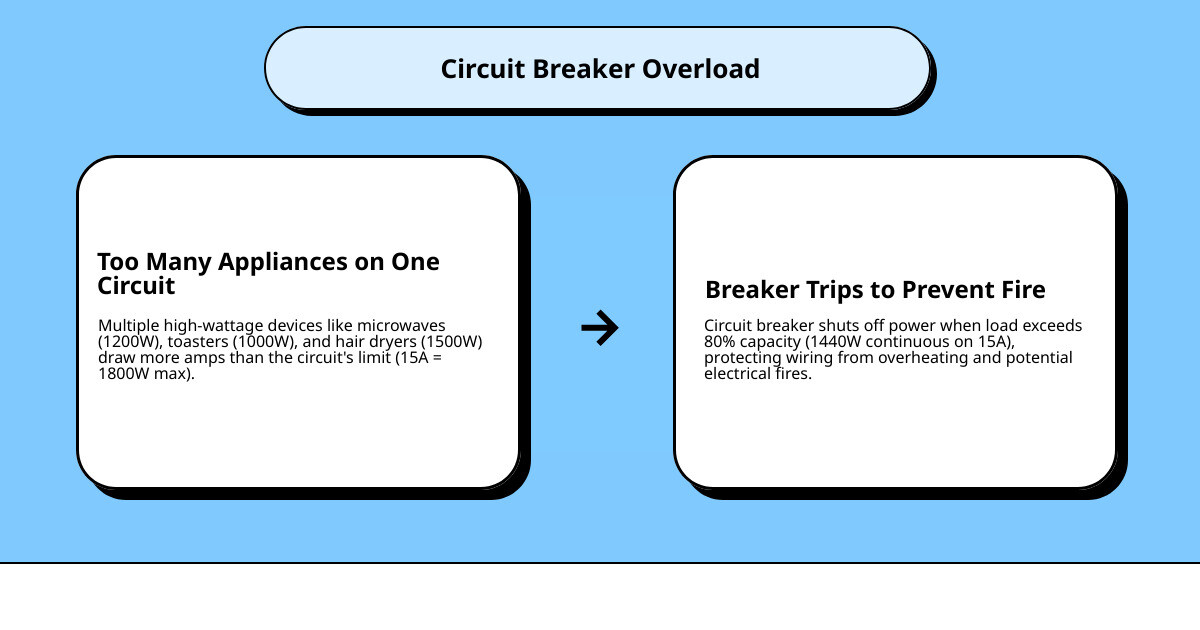
Can too many appliances trip a circuit breaker? Yes — and it happens more often than most homeowners realize. When the total power draw from multiple devices exceeds what a single circuit is designed to handle, the breaker does exactly what it’s supposed to do: it shuts off power to prevent the wiring from overheating and potentially starting a fire.
Here’s the short answer:
- A standard 15-amp circuit safely handles about 1,800 watts of continuous load
- A 20-amp circuit handles about 2,400 watts
- For safety, you should never exceed 80% of that capacity on a continuous basis
- A single hair dryer (~1,500W) plus a microwave (~1,200W) on the same circuit will trip a 15-amp breaker
- The fix ranges from redistributing appliances to installing dedicated circuits
Picture this: it’s a busy morning in Canajoharie. You’ve got the toaster going, the microwave reheating yesterday’s coffee, and someone in the next room has just switched on a space heater. Then — darkness. That tripped breaker isn’t a malfunction. It’s your home’s electrical system doing its job, telling you the circuit has hit its limit.
The good news is that understanding why this happens puts you in control. And in most cases, a few simple changes — or a call to a licensed electrician — can solve the problem for good.
Easy can too many appliances trip a circuit breaker word list:
- Circuit Breaker Tripping in Older Homes Causes
- How to Troubleshoot a Tripping Circuit Breaker
- Is a Tripping Circuit Breaker Dangerous
Understanding the Basics: Can Too Many Appliances Trip a Circuit Breaker?
At its core, your electrical system is a network of “loops” called circuits. Each circuit is designed to carry a specific amount of electricity, measured in Amps. The circuit breaker in your service panel acts as a gatekeeper. If you try to pull more electricity through those wires than they are rated for, the friction of the moving electrons creates heat. If left unchecked, that heat could melt wire insulation and ignite the wood or drywall inside your walls.
When we ask if can too many appliances trip a circuit breaker, we are really talking about “overcurrent protection.” The breaker is a safety mechanism that senses this excess heat or current and snaps into the “off” position, instantly cutting the flow of power. It’s a vital line of defense for your family’s safety. To learn more about the mechanics behind this, you can read our guide on Circuit Breaker Tripping: Find the Cause and Keep the Lights On.
Calculating your load to see if too many appliances trip a circuit breaker
To prevent these annoying interruptions, it helps to understand the math behind your home’s power. Most standard outlets in a home are on 15-amp or 20-amp circuits. In the United States, our standard voltage is 120V. Using the simple formula (Amps x Volts = Watts), we can find the maximum capacity for any circuit.
However, electricians follow the “80% Rule.” This means for any “continuous load” (anything running for more than three hours), you should only use 80% of the circuit’s maximum capacity to avoid wearing out the breaker prematurely and ensuring a safety margin.
| Circuit Rating | Maximum Wattage | Safe Target (80% Load) |
|---|---|---|
| 15-Amp Circuit | 1,800 Watts | 1,440 Watts |
| 20-Amp Circuit | 2,400 Watts | 1,920 Watts |
If you look at the labels on your appliances, you’ll see their wattage or amperage ratings. If you have a 1,500W space heater and a 1,000W vacuum cleaner running on the same 15-amp circuit, you are drawing 2,500 watts—well over the 1,800W maximum. The breaker will trip every single time.
High-wattage culprits in the modern kitchen
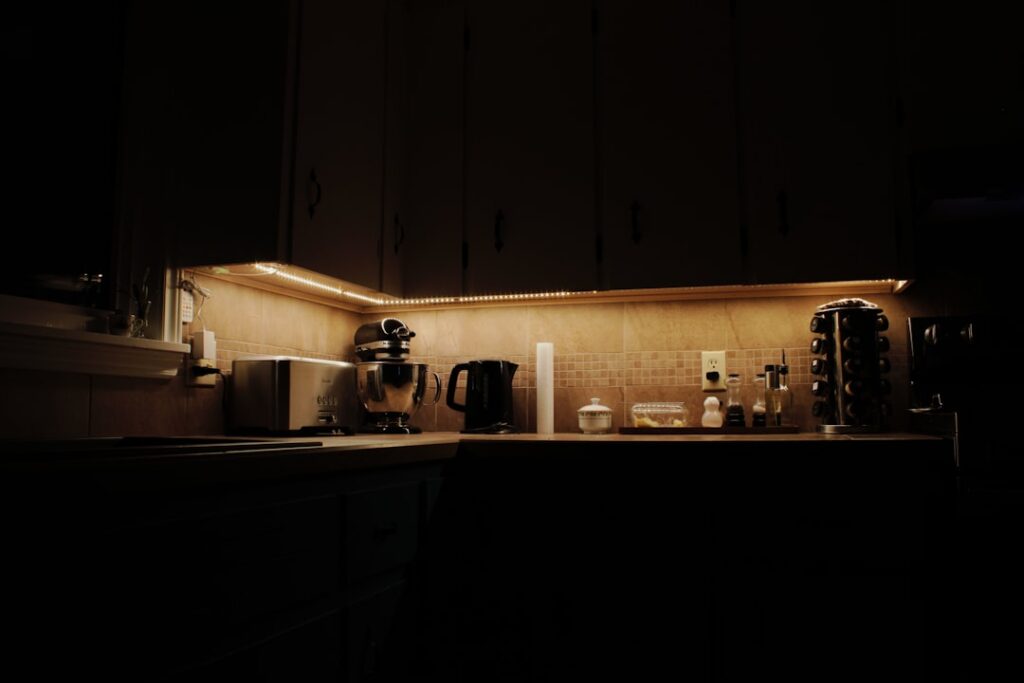
The kitchen is the most common place for overloads because it houses the highest concentration of high-wattage devices. Modern life has introduced a “gadget-heavy” lifestyle that older homes simply weren’t built for. Here are some of the most common culprits:
- Air Fryers: 1,200 to 1,500 Watts
- Microwaves: 1,000 to 1,500 Watts
- Toaster Ovens: 1,200 to 1,500 Watts
- Coffee Makers: 800 to 1,200 Watts
- Dishwashers: 1,200 to 1,500 Watts
- Space Heaters: 1,500 Watts (consistently)
- Hair Dryers: Up to 1,800 Watts
It’s easy to see how can too many appliances trip a circuit breaker when you realize that just one of these items can nearly max out a standard 15-amp circuit. If you run two at once, you’re guaranteed to be heading to the basement to flip a switch.
Warning Signs of an Overloaded Circuit Beyond the Tripped Breaker
A tripped breaker is actually the final warning sign. Your home often tries to tell you the circuit is struggling long before the power cuts out. We encourage our neighbors in Montgomery and Schoharie counties to keep an eye out for these subtle red flags:
- Flickering or Dimming Lights: If your lights dip when the refrigerator kicks on or while you’re using the microwave, the circuit is being “starved” of voltage.
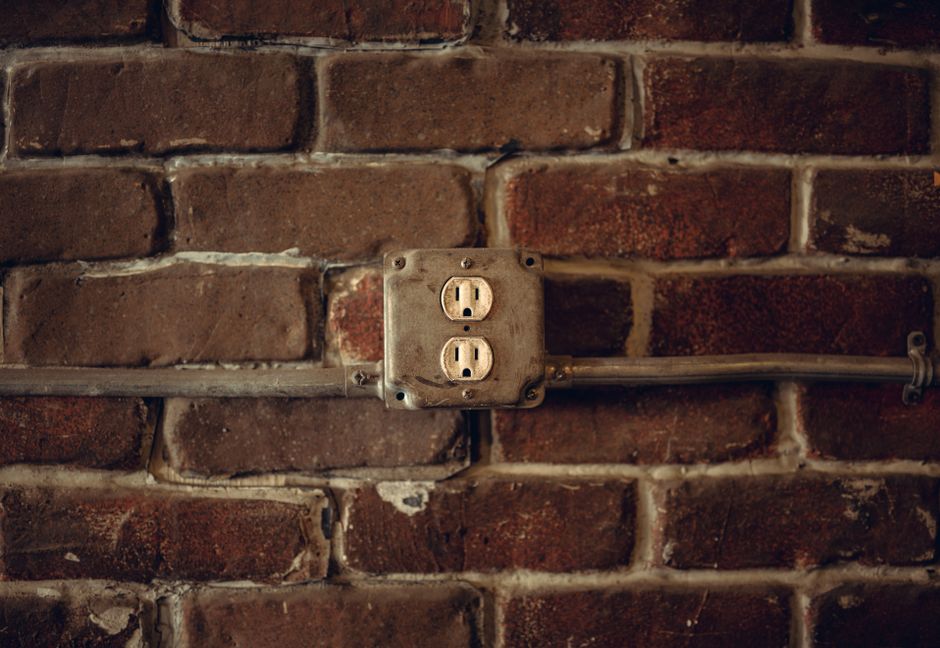
- Warm Outlets or Switches: If an outlet cover feels warm to the touch, it indicates that heat is building up in the wiring behind the wall. This is a serious fire hazard.
- Buzzing or Popping Sounds: Electricity should be silent. A buzzing sound near an outlet or the breaker panel often points to a loose connection or a circuit under extreme stress.
- Burning Smells: The smell of burning plastic or ozone near an appliance or outlet is an emergency. It means the wire insulation is already melting.
Ignoring these signs can lead to permanent damage to your appliances. Voltage drops from overloaded circuits can “starve” motors in refrigerators and air conditioners, causing them to burn out years earlier than they should. For more tips on what to look for, check out our list of Common Home Electrical Hazards and How to Avoid Them.
Why too many appliances trip a circuit breaker in older homes
If you live in a beautiful historic home in Sharon Springs or Little Falls, your electrical system might be decades old. In the 1950s and 60s, a home might have only had one or two circuits for the entire kitchen. Today, we have air fryers, blenders, espresso machines, and smart fridges all competing for that same limited power.
Furthermore, some older homes still contain outdated panels like Federal Pacific Electric (FPE) or Zinsco. These brands are notorious for failing to trip during an overload. While a breaker that trips too often is annoying, a breaker that never trips is a major fire risk because it allows the wires to keep heating up until they ignite. As of May 2026, many insurance companies are requiring these panels to be replaced for safety. You can learn more about these specific risks in our article on the Top Reasons Older Home Breakers Keep Tripping.
Safe Troubleshooting: How to Handle a Tripped Breaker
When the power goes out, don’t panic. Following a safe, systematic approach can help you identify the problem without putting yourself at risk.
- Locate the Panel: Head to your service panel (usually in the basement, garage, or a utility closet).
- Identify the Tripped Breaker: Look for a switch that isn’t fully in the “On” position. It will likely be stuck in the middle or flipped all the way to “Off.”
- Unplug Everything: Before you reset the breaker, go back to the room that lost power and unplug the appliances you were using. This prevents a “startup surge” (inrush current) from tripping the breaker again the moment you flip it.
- The Reset: To reset, flip the breaker firmly to the “Off” position first, then flip it back to “On.”
- Distribute the Load: If it stays on, avoid plugging those same high-wattage items back into the same outlets. Move the space heater or the air fryer to a different room that is on a separate circuit.
If you’ve followed these steps and the breaker trips again immediately with nothing plugged in, you likely have a “short circuit” or a “ground fault,” which requires professional attention. For a deeper dive into DIY steps, see our guide on Troubleshooting Your Tripped Breaker Without Calling an Electrician.
Is it dangerous if your circuit breaker keeps tripping repeatedly?
Yes. While the breaker is doing its job by tripping, the fact that it has to trip repeatedly is a sign of underlying stress. Each time a circuit overloads, the wires inside your walls heat up. Over time, this heat makes the wire insulation brittle, leading to “arc faults”—where electricity jumps across a gap, creating a spark that can reach 10,000 degrees Fahrenheit.
Repeated tripping also wears out the breaker itself. A breaker is a mechanical device, and after years of “tripping,” the internal springs and contacts can weaken, leading to inconsistent performance. If you’re wondering Safety First: Understanding the Risks of a Repeatedly Tripping Breaker, it is always better to fix the root cause than to keep flipping the switch.
Professional Solutions: Dedicated Circuits and Panel Upgrades
If you find that you can’t use your kitchen or home office without playing “musical chairs” with your appliances, it’s time for a long-term solution. Modern building codes now require dedicated circuits for major appliances. This means your microwave, refrigerator, and dishwasher each have their own “lane” of power that they don’t have to share with anything else.
For homes in our service area, from Broadalbin to Cobleskill, we often recommend:
- Installing Dedicated Lines: Adding a new 20-amp circuit for the kitchen or garage workshop so you can run power tools or air fryers without worry.
- Electrical Panel Upgrades: If your panel is full or outdated, upgrading to a 200-amp service provides the “headroom” needed for modern HVAC systems, EV chargers, and high-end appliances.
- Whole-Home Surge Protection: To protect your expensive electronics from internal surges caused by large appliances cycling on and off.
Upgrading your system isn’t just about convenience; it’s about peace of mind. To see how your home measures up, you can review The Ultimate Home Electrical Safety Checklist for Beginners.
Frequently Asked Questions
Can a power strip prevent a breaker from tripping?
No. In fact, power strips can actually make the problem worse. A power strip allows you to plug six items into one outlet, but it doesn’t change the fact that the outlet is still only rated for 15 or 20 amps. If you plug three high-wattage appliances into one power strip, you are almost guaranteed an overload. Furthermore, “daisy-chaining” (plugging one power strip into another) is a major fire hazard.
Why does my breaker trip even when I’m not using many appliances?
If your breaker trips with very little load, you might have a short circuit (where a hot wire touches a neutral wire) or a ground fault (where electricity leaks out of the circuit, often due to moisture). These are more dangerous than a simple overload and should be inspected by a professional immediately.
When should I call a professional for a tripping breaker?
You should call us at Don’s Electric & Plumbing if:
- You smell burning plastic or see smoke.
- The breaker panel feels hot to the touch.
- A breaker will not stay reset even after you’ve unplugged everything.
- You see scorch marks or discoloration on outlets.
- Your lights flicker every time an appliance turns on.
Conclusion
At the end of the day, the answer to “can too many appliances trip a circuit breaker” is a resounding yes—but it’s a problem with a clear solution. Your home’s electrical system is like an engine; if you push it too hard for too long, things start to break. By understanding your circuit limits and distributing your appliance load, you can keep your home running smoothly and safely.
Since 1984, Don’s Electric & Plumbing Inc. has been the trusted name for electrical, plumbing, and HVAC services in Canajoharie and across Montgomery, Fulton, Schoharie, and Herkimer counties. As a family-owned and operated business, we treat your home like our own. Whether you need a simple circuit repair or a full panel upgrade to handle your modern appliances, we offer a 100% satisfaction guarantee and 24/7 emergency services.
Don’t let a tripping breaker leave you in the dark. If you’re looking for expert Electric Service Canajoharie NY, give us a call today. We’re here to ensure your home stays comfortable, powered, and most importantly, safe.