


Why Knowing When Does a House Need Rewiring Could Save Your Home and Family
When does a house need rewiring is one of the most important questions a homeowner can ask — and the answer could mean the difference between a safe home and a serious fire hazard. According to the National Fire Protection Association, electrical problems cause over 31,600 home fires every year in the U.S., resulting in hundreds of deaths, thousands of injuries, and over $1.6 billion in property damage. Around 60% of those fires trace back to wiring that is too old or improperly installed.
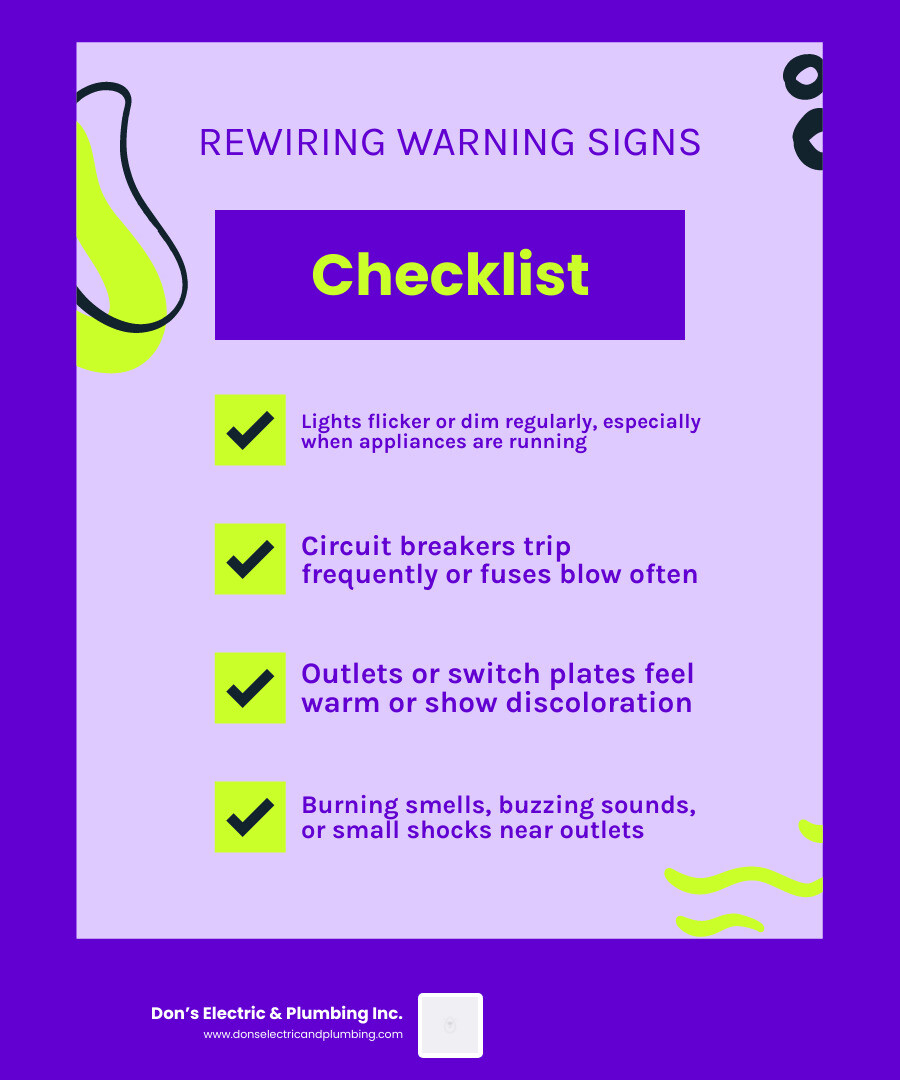
Here is a quick look at the most common signs your home may need rewiring:
- Your home is 30-40+ years old and has never been rewired
- Lights flicker or dim regularly, especially when appliances are running
- Circuit breakers trip frequently or fuses blow often
- Outlets or switch plates feel warm to the touch or show discoloration
- You smell burning near outlets, switches, or the electrical panel
- You hear buzzing or sizzling sounds from walls or outlets
- You receive small shocks when plugging in appliances
- Your home still has two-prong outlets or an old fuse box
- You have aluminum or knob-and-tube wiring from the 1960s-70s or earlier
- You rely heavily on extension cords because there are not enough outlets
Even if your home shows no obvious symptoms, older properties — particularly those built before 1980 in areas like Canajoharie, Cobleskill, and across Montgomery, Schoharie, and Fulton counties — often carry hidden electrical risks that only a licensed inspection can uncover. The wiring inside your walls works silently every day, and by the time problems become visible, the danger may already be significant.
At Don’s Electric & Plumbing Inc., we have been helping local homeowners stay safe since 1984. If any of the signs above sound familiar, do not wait for a fire to be your warning.
Recognizing the Warning Signs: When Does a House Need Rewiring?

While much of your home’s electrical system is tucked away behind drywall or under floorboards, it often sends out distress signals before a total failure occurs. Understanding these signs is the first step in determining when does a house need rewiring. We often think of electricity as the “invisible lifeblood” of our modern world, but when it starts making itself visible through sparks or smells, it is time for professional intervention.
Flickering or dimming lights are one of the most common early indicators. If your living room lights dip every time the refrigerator kicks on or the microwave starts, your circuits are likely being pushed to their limit. This “power sag” suggests that your existing wiring cannot handle the simultaneous demand of modern appliances.
Another major red flag is the presence of buzzing or sizzling sounds. Electricity should be silent. If you hear a faint hum or a crackling noise coming from your walls or behind a switch plate, it usually indicates “arcing.” This is where electricity jumps across a gap in a damaged or loose wire, generating intense heat that can easily ignite nearby wooden studs or insulation.
If you are experiencing these symptoms, you should read more about Safety First: Understanding the Risks of a Repeatedly Tripping Breaker and Circuit Breaker Tripping Find The Cause And Keep The Lights On to understand how your system is trying to protect itself.
Identifying when does a house need rewiring based on outlet heat
One of the most urgent signs that your home requires professional attention is heat. Outlets and switch plates should never feel warm to the touch. If you notice a switch plate is hot, or if you see brown or black scorch marks around the plug-in holes, your wiring is literally “cooking” the plastic. This is often caused by overloaded circuits or loose connections that create resistance, which in turn generates heat.
You might also experience a “tingle” or a small shock when you touch a metal appliance or plug something in. Many homeowners dismiss this as simple static electricity, but in an older home, it is often a sign of a ground fault. Without a proper path to the ground, that excess electricity is looking for any way out—including through you. These “tingles” are precursors to major electrical failures. To better protect your family, familiarize yourself with Common Home Electrical Hazards and How to Avoid Them.
Persistent issues with blown fuses and tripped breakers
Your electrical panel is the “brain” of your home’s power system. Its job is to shut off the flow of electricity if it detects a dangerous surge or an overload. If you find yourself walking to the basement or garage once a week to flip a breaker back on, your system is telling you it is overmatched.
Modern homes in areas like Sharon Springs or Broadalbin now run significantly more high-wattage devices than they did just 20 years ago. Air fryers, EV chargers, high-end gaming computers, and modern HVAC systems place a massive strain on older 60-amp or 100-amp services. Frequent trips are a safety mechanism, but they also indicate that your wiring is under constant stress. If you are tired of the dark, you can try Troubleshooting Your Tripped Breaker Without Calling an Electrician for minor issues, but persistent tripping usually points to the need for a system-wide upgrade.
Property Age and Outdated Wiring Materials
Age is perhaps the most reliable metric for determining when does a house need rewiring. The industry standard guideline for the lifespan of PVC-insulated copper wiring is between 25 and 40 years. While modern PVC cables can potentially last up to 70 years if they were perfectly installed and never disturbed, environmental factors and the sheer increase in electrical load often shorten that window.
If your property was built before 1985 and has never undergone a full electrical renovation, it is highly likely that the insulation on your wires is becoming brittle. As insulation cracks, live wires are exposed, significantly increasing the risk of short circuits and fires. For homeowners in Fulton County, considering a Panel Replacement Broadalbin is often the first step in a larger rewiring project. Understanding the Top Reasons Older Home Breakers Keep Tripping can help you see the connection between age and functionality.
Determining when does a house need rewiring in older Canajoharie homes
In historic areas like Canajoharie, many homes still contain “knob-and-tube” wiring. This system, standard before the 1940s, uses porcelain knobs to support wires and ceramic tubes to protect them where they pass through wood. While it was an engineering marvel at the time, knob-and-tube wiring lacks a ground wire. This makes it incompatible with modern three-prong appliances and highly dangerous in wet areas like kitchens and bathrooms.
Furthermore, knob-and-tube systems were designed to dissipate heat into open air. When modern homeowners add blown-in insulation to their attics to save on heating bills, they often inadvertently “smother” these old wires, causing them to overheat. If you live in an older property, using The Ultimate Home Electrical Safety Checklist for Beginners can help you identify these antiquated systems.
The specific risks of aluminum wiring from the 1960s and 1970s
Between 1965 and 1973, a copper shortage led many builders to use aluminum wiring. We now know that aluminum expands and contracts much more than copper when electricity flows through it. This “thermal expansion” causes connections at outlets and switches to wiggle loose over time.
Research from the Consumer Product Safety Commission (CPSC) shows that homes with aluminum wiring are 55 times more likely to have fire hazard conditions at their outlets than those wired with copper. If your wire jackets are marked with the letters “AL,” you are sitting on a significant risk. Because of the complexity and danger involved, there are Common Electrical Issues: Why You Legally Can’t Fix Everything, and aluminum remediation is definitely a job for the pros.
The Dangers of Faulty Electrical Systems
The primary danger of outdated wiring is, of course, fire. When wires are overloaded or insulation fails, the resulting heat can reach thousands of degrees in a fraction of a second. This “arcing” can ignite dust, insulation, or the wooden framework of your home before you even realize there is a problem.
Beyond fire, there is the risk of electrocution. Older systems often lack Ground Fault Circuit Interrupters (GFCIs) in bathrooms and kitchens. Without these, a faulty appliance or a splash of water can turn a routine morning into a life-threatening emergency. Ungrounded two-prong outlets also offer no protection for your expensive electronics. A single power surge can fry your computer, television, or smart refrigerator because the excess voltage has no “exit ramp” to the ground.
Finally, there are the insurance implications. Many insurance providers in New York are now refusing to renew policies for homes with knob-and-tube or aluminum wiring. Even if they do provide coverage, your premiums may be significantly higher. Rewiring your home is an investment that pays dividends in safety, lower insurance costs, and increased property value.
The Professional Rewiring Process Explained
Rewiring a house is a major project, but it is one of the smartest investments you can make for your property. The process typically begins with an Electrical Installation Condition Report (EICR). This is a comprehensive “physical” for your home’s electrical system. A licensed electrician will test the integrity of the circuits, check for proper grounding, and identify any immediate hazards.
Once the assessment is complete, the process moves into two main stages:
- The First Fix: This is the “messy” part. We run new cables through the walls, floors, and ceilings. We also install new back boxes for all your outlets and switches. In many cases, we can use minimally invasive techniques to avoid tearing down entire walls, but some “chasing” (cutting small channels in plaster) is usually necessary.
- The Second Fix: Once the new wires are in place, we connect them to the new electrical panel, outlets, switches, and light fixtures. This is also when we install safety devices like GFCIs and Arc Fault Circuit Interrupters (AFCIs).
After everything is connected, we perform final testing to ensure every circuit is balanced, grounded, and meets current National Electrical Code (NEC) standards.
Frequently Asked Questions about Home Rewiring
How long does the rewiring process take? For an average three-bedroom home, a full rewire typically takes between 3 to 10 days. This timeline depends on whether the house is occupied or vacant, as working around furniture and residents can add time to the project.
What is an EICR and why is it recommended? An EICR is a formal document produced following an assessment of the electrical installation within a property. It is recommended every 10 years for homeowners to ensure the system hasn’t degraded to a dangerous level. It is essentially an “MOT” for your home’s electrics.
Can I perform a partial rewire for specific rooms? Yes. If you are remodeling a kitchen or adding a home office, we can perform a partial rewire to ensure those high-demand areas have dedicated circuits and modern safety features without overhauling the entire house. However, if the underlying main panel is outdated, a partial rewire may still require a panel upgrade to handle the new load.
Conclusion
Determining when does a house need rewiring is about more than just fixing a flickering light; it is about protecting the people you love and the home you have worked hard to build. Since 1984, Don’s Electric & Plumbing Inc. has been the trusted name for electrical safety across Montgomery, Schoharie, and Fulton counties.
Whether you are in Canajoharie, Broadalbin, or Sharon Springs, our family-owned team is ready to bring your home up to modern safety standards. We offer a 100% satisfaction guarantee, emergency services for those urgent “burning smell” moments, and financing options to make your safety upgrades manageable.
Don’t let an electrical fire be your wake-up call. Schedule your professional electrical inspection today and start enjoying the peace of mind that comes with a safe, modern, and efficient home.