


Why Your Spring Outdoor Electrical Safety Check Can’t Wait This Year
A spring outdoor electrical safety check is one of the most important things you can do before firing up the pressure washer, planting the garden, or stringing lights across the patio. Yet most homeowners skip it entirely — until something goes wrong.
Here’s a quick overview of what a spring outdoor electrical safety check involves:
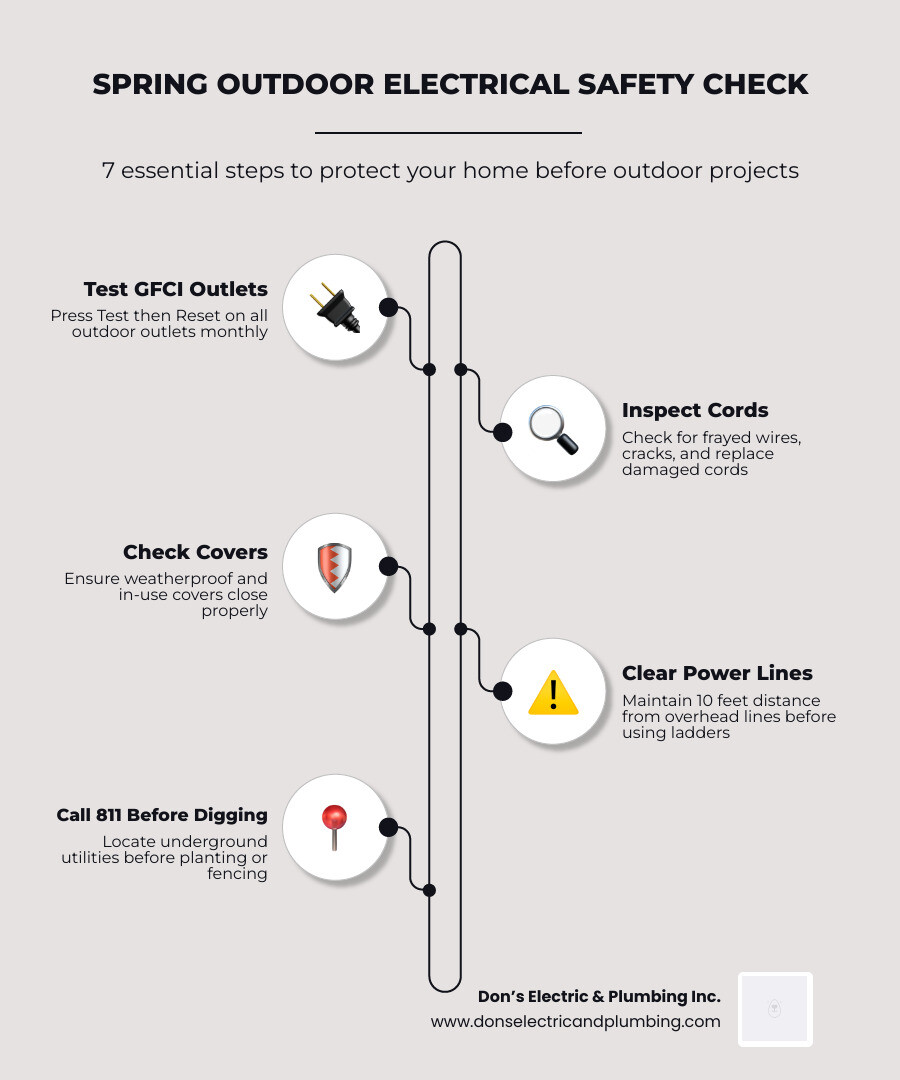
- Test all outdoor GFCI outlets – Press the “Test” button, confirm power cuts off, then press “Reset” to restore it.
- Inspect extension cords – Look for frayed insulation, cracked plugs, or exposed copper. Replace anything damaged.
- Check outdoor outlet covers – Make sure weatherproof and in-use covers are intact and closing properly.
- Look for winter damage – Examine exterior fixtures and wiring for cracks, corrosion, or loose connections caused by cold and moisture.
- Clear 10 feet from overhead power lines – Before using ladders, pruners, or any long-handled tools.
- Call 811 before digging – Required before planting trees, installing fences, or any ground-breaking project.
- Test smoke and CO detectors – Replace batteries and confirm they’re functioning before summer activity increases.
Electrical fires cause an estimated 51,000 home fires every year in the United States, resulting in around 500 deaths and 1,400 injuries. Many of those fires start with hazards that a simple seasonal check would have caught — a damaged cord here, an unprotected outdoor outlet there.
Spring in particular creates a perfect storm of risk. Winter leaves behind loosened connections, cracked insulation, and moisture damage that isn’t always visible. As the weather warms and you start plugging in more tools, lights, and appliances outside, those hidden problems get put under stress. The result can range from a nuisance breaker trip to a serious shock or fire.
The good news is that most of the checks are straightforward, and knowing what to look for takes the guesswork out of the whole process.
Why a spring outdoor electrical safety check is Essential
In Montgomery County, Fulton County, Schoharie County, Herkimer County, and the surrounding Canajoharie area, spring often means damp ground, leftover winter wear, fast-changing weather, and a sudden urge to tackle every outdoor project in one weekend. We get it. Spring has a funny way of making that ladder you ignored since fall look like your new best friend.
But outdoor electrical systems take a beating through winter. Snow, ice, freezing temperatures, wind, and moisture can damage or loosen parts that looked fine last year. A spring outdoor electrical safety check helps you catch those issues before you add pressure washers, lawn equipment, landscape lighting, patio appliances, and power tools to the mix.
Common spring electrical hazards include:
- Moisture inside outdoor outlets or boxes – Water can lead to corrosion, ground faults, and shock hazards.
- Cracked or missing outlet covers – An uncovered outdoor receptacle can collect rain, pollen, insects, and debris.
- Damaged extension cords – Cold weather, UV exposure, rodents, garage storage, and physical wear can crack insulation.
- Loose exterior fixtures – Outdoor lights, junction boxes, and conduit can shift after freeze-thaw cycles.
- Overloaded circuits – Running several tools, lights, and appliances at once can trip breakers or strain wiring.
- Tree branches near power lines – Spring trimming can become dangerous quickly if hidden lines are involved.
- Digging without utility marking – Fence posts, mailbox posts, garden beds, and tree planting can all disturb buried utilities.
Problems in home wiring, including arcing and sparking, are associated with more than 40,000 home fires each year. Arc-fault circuit interrupters, or AFCIs, are designed to help prevent fires caused by dangerous arcing and are expected to prevent more than half of electrical fires that start in home wiring.
If you want a broader whole-home safety routine, we recommend pairing this outdoor checklist with The Ultimate Home Electrical Safety Checklist for Beginners and our guide to Common Home Electrical Hazards and How to Avoid Them.
Inspecting Outlets, GFCIs, and Extension Cords
Start your outdoor check where most projects begin: the outlet.
Outdoor outlets should be protected from moisture and should have GFCI protection. GFCI stands for ground-fault circuit interrupter. In plain English, it is a safety device that shuts off power quickly when electricity starts taking an unsafe path, such as through water or a person.
This matters because water and electricity are still the original bad pairing. Morning dew, wet grass, sprinklers, rain, melting snow, and sweaty hands can all increase shock risk when using outdoor electrical equipment.
When inspecting outdoor outlets, look for:
- Cracked outlet covers
- Covers that do not close properly
- Missing screws or loose boxes
- Rust, green corrosion, or staining
- Burn marks or discoloration
- Buzzing or crackling sounds
- Plugs that feel loose or fall out
- Outlets or wall plates that feel warm
- GFCI outlets that will not test or reset
Outdoor outlets should also have weatherproof covers. For outlets that are used while something is plugged in, an in-use cover is the safer choice. A flat cover protects an outlet only when nothing is plugged in. An in-use cover helps protect the cord connection while it is connected.
If you have children or grandchildren playing outside, outlet safety matters even more. For family-focused electrical safety reminders, see How to Keep Your Little Ones Safe Around Outlets and Wires.
And if you notice odd smells, scorch marks, buzzing, or heat near any outlet, do not ignore it. Our guide on Sniffing Out Trouble: How to Spot Dangerous Electrical Problems explains the warning signs in more detail.
| Feature | Indoor Extension Cord | Outdoor Extension Cord |
|---|---|---|
| Intended use | Dry indoor areas | Outdoor projects and damp conditions |
| Insulation | Lighter-duty jacket | Thicker, weather-resistant jacket |
| Moisture protection | Not designed for rain, dew, or wet grass | Built to better handle moisture exposure |
| Temperature and sunlight | Limited protection | Designed for outdoor temperature changes and UV exposure |
| Labeling | Usually not marked for outdoor use | Should be marked for outdoor use |
| Safe for permanent use? | No | No, temporary use only |
| Common risk if misused | Overheating, shock, damaged insulation | Still unsafe if damaged, overloaded, or left out long-term |
Step-by-Step GFCI Testing for Your spring outdoor electrical safety check
GFCIs can prevent approximately 70% of electrocutions that occur when electrical products are used outdoors. That is a big safety benefit for a test that takes less than a minute.
Here is how to test a GFCI outlet:
- Plug in a small lamp, radio, or outlet tester.
- Turn the device on so you know power is flowing.
- Press the “Test” button on the GFCI outlet.
- Confirm the power shuts off.
- Press the “Reset” button.
- Confirm power is restored.
If the outlet does not shut off when you press “Test,” stop using it. If it will not reset, trips again immediately, or feels warm, there may be moisture intrusion, wiring damage, a faulty device, or a downstream issue.
GFCI outlets should be tested monthly, especially outdoor outlets, garage outlets, bathroom outlets, kitchen outlets, basement outlets, and any outlet near water. If your outdoor outlet does not have the familiar “Test” and “Reset” buttons, it may still be protected by another GFCI upstream, such as one in the garage, basement, or another exterior location. If you are unsure, we can help verify it.
Inspecting Extension Cords Before Spring Projects
Extension cords are useful, but they are temporary tools, not permanent wiring. If a cord is doing the job of a real outdoor outlet all season long, that is a sign the system may need an upgrade.
Before using any extension cord outside, check for:
- Frayed insulation
- Cracks or brittleness
- Exposed copper
- Loose plugs
- Missing grounding prongs
- Burn marks
- Flattened or pinched sections
- Tape repairs
- Signs of chewing or rodent damage
Never repair a damaged extension cord with electrical tape and call it good. Tape does not restore the cord’s original insulation, weather resistance, or strain protection.
Follow these cord safety rules:
- Use only cords marked for outdoor use.
- Keep cord connections off wet ground.
- Do not run cords through windows, doors, or under rugs.
- Do not drive over cords with lawn equipment or vehicles.
- Do not daisy-chain cords or power strips.
- Match the cord to the tool’s power needs.
- Unplug cords by the plug, not by yanking the cord.
- Store cords indoors in a dry place when not in use.
- Replace outdoor cords that are old, brittle, or damaged.
If you need power in the same outdoor area every spring and summer, a properly installed exterior outlet is safer and more convenient than a long-term extension cord setup.
Safe Practices for Yard Work and Storm Preparation
Spring projects often involve ladders, trimming tools, digging, and storm cleanup. Those are exactly the situations where outdoor electrical risks increase.
The first rule is simple: stay at least 10 feet away from overhead power lines. That includes your body, ladder, pruning tools, paint rollers, pool skimmers, metal poles, and anything else you are holding.
You do not have to touch a power line to be in danger. High-voltage electricity can arc, or jump, through the air. Wet conditions, metal tools, and long-handled equipment increase the danger.
Contact with overhead power lines causes approximately 130 worker deaths each year. Homeowners face similar risks when cleaning gutters, trimming trees, painting, moving ladders, or flying drones and kites near lines.
Before working near trees, ask:
- Are branches touching or near overhead power lines?
- Could a cut branch fall onto a line?
- Is the line hidden in leaves or behind limbs?
- Will my ladder, pole saw, or tool stay at least 10 feet away?
If branches are near power lines, do not try to remove them yourself. Contact the utility company or a qualified tree professional who is trained for line-clearance work.
Before digging, call 811. Do this before:
- Planting trees or large shrubs
- Installing fence posts
- Setting mailbox posts
- Building decks or patios
- Installing irrigation lines
- Adding landscape lighting
- Digging trenches for drainage or outdoor wiring
Calling 811 helps mark underground utilities so you do not accidentally strike buried electric, gas, water, sewer, or communication lines. Even shallow digging can create risk.
Spring storms are another major concern. Outdoor electrical systems should be ready for heavy rain, wind, lightning, and power interruptions.
To prepare for wet weather and storms:
- Confirm outdoor outlet covers close tightly.
- Use in-use covers where cords remain plugged in.
- Keep extension cord connections elevated and away from puddles.
- Unplug nonessential outdoor electronics before severe storms.
- Avoid using corded tools in rain, wet grass, or standing water.
- Inspect outdoor lighting after storms for damage or water inside fixtures.
- Consider surge protection for sensitive electronics and outdoor equipment.
- Have generators installed and maintained properly, never used indoors or in garages.
Outdoor lighting, pool equipment, patio electronics, smart devices, and appliances can all be damaged by surges. Whole-home surge protection can help reduce risk from lightning-related surges and utility fluctuations.
For more seasonal backyard safety tips, see Stay Safe This Summer: The Ultimate Backyard Electrical Safety Guide.
Rules for Using Power Tools, Lighting, and Appliances Outdoors
Outdoor tools make spring cleanup easier. They also demand respect. A power tool on damp ground with a damaged cord is not “just a quick job.” It is a shock hazard wearing a helpful disguise.
Follow these outdoor power tool rules:
- Read the manufacturer’s instructions before use.
- Inspect the cord, plug, housing, and switch before every use.
- Use GFCI-protected outlets.
- Wear rubber-soled shoes, especially if the ground is damp.
- Keep hands dry. Sweaty hands can also increase electrical risk.
- Unplug tools before changing blades, bits, strings, or attachments.
- Keep cords visible and away from cutting paths.
- Do not use corded tools in rain or standing water.
- Stop using any tool that shocks, sparks, smells hot, or runs inconsistently.
- Store tools unplugged in a dry location.
For outdoor lighting, make sure fixtures are rated for the location. “Damp location” and “wet location” are not the same thing. A damp-location fixture may be acceptable under a covered porch where it is protected from direct rain. A wet-location fixture is designed for areas exposed to rain or direct water contact.
Check outdoor lighting for:
- Cracked lenses
- Water or fogging inside covers
- Loose fixtures
- Exposed wiring
- Corroded sockets
- Flickering
- Bulbs that exceed the fixture’s wattage rating
- Landscape lights damaged by shovels, mowers, or snow removal
Low-voltage landscape lighting can be a good option for paths, gardens, and accents, but it still needs correct installation. Transformers should be outdoor-rated, connections should be protected from water, and buried cable should be placed properly so it is not damaged by gardening or lawn equipment.
Outdoor appliances and equipment also deserve attention. Electric grills, patio heaters, hot tub equipment, pool pumps, outdoor refrigerators, sump pump discharge area equipment, and irrigation controls may need dedicated circuits or special protection. If a breaker trips whenever you run multiple outdoor devices, the circuit may be overloaded.
Never keep resetting a breaker without finding out why it is tripping. A breaker is not being dramatic. It is doing its job.
When to Call a Professional Electrician
Some spring checks are safe for homeowners: looking for damage, testing GFCIs, checking covers, and replacing obviously damaged cords. But electrical repair work is different. If the issue involves wiring, panels, buried cable, hardwired fixtures, grounding, permits, or repeated breaker trips, it is time to bring in a qualified electrician.
Call a professional electrician if you notice:
- Outdoor outlets without GFCI protection
- GFCIs that will not test or reset
- Repeated breaker trips
- Warm outlets, switches, or cover plates
- Buzzing, crackling, or sizzling sounds
- Burning smells or scorch marks
- Flickering lights tied to outdoor equipment use
- Water inside fixtures or outlet boxes
- Corroded wiring or exposed conductors
- Damaged conduit or exterior wiring
- Outlets that feel loose or do not hold plugs securely
- A need for new outdoor outlets, lighting, or dedicated circuits
- Panel upgrades or capacity concerns
- Any electrical work near pools, hot tubs, or water features
Hardwired outdoor lighting, new exterior receptacles, generator connections, panel work, and buried wiring should be handled professionally for safety and code compliance.
If your breaker keeps tripping during outdoor projects, stop using the equipment until the issue is checked. It may be a simple overload, but it can also point to a ground fault, damaged wiring, failing equipment, or moisture intrusion. Learn more in Safety First: Understanding the Risks of a Repeatedly Tripping Breaker.
For other issues that should not be put off, visit Electrical Safety Issues Require Attention.
When to Schedule a Professional spring outdoor electrical safety check
A professional spring outdoor electrical safety check is a smart idea once a year, especially after winter and before heavier summer use begins. In our region, that timing makes sense because snow, ice, rain, wind, and freeze-thaw cycles can all affect exterior components.
Schedule a professional inspection if:
- Your home is older or has outdated wiring.
- You rely heavily on extension cords outside.
- You are adding outdoor appliances, lighting, a pool, a hot tub, or a workshop.
- You have had storm damage.
- Your outdoor outlets stop working after rain.
- Your panel is crowded, outdated, buzzing, or frequently tripping.
- You are preparing to sell or renovate.
- You simply want peace of mind before summer.
A professional check can include verifying GFCI and AFCI protection, checking outdoor boxes and covers, inspecting visible wiring and conduit, evaluating circuit capacity, reviewing panel condition, and identifying unsafe DIY work.
At Don’s Electric & Plumbing Inc., we are family-owned and operated, and we have served homeowners since 1984. We offer electrical, plumbing, and HVAC services, emergency service, financing options, and a 100% satisfaction guarantee because safety and comfort should not be stressful.
Warning Signs of Dangerous Wiring Issues
Some electrical problems are subtle. Others practically wave a little red flag and say, “Please stop using me.”
Watch for these warning signs:
- Breakers that trip repeatedly
- Lights that flicker when equipment starts
- Outlets or switches that feel warm
- Buzzing from outlets, switches, fixtures, or the panel
- Burning or fishy odors
- Scorch marks or discoloration
- Plugs that spark when inserted
- Loose outlets or cracked plates
- Outdoor lights that fail after rain
- GFCIs that trip repeatedly
- Appliances that seem underpowered
- Heavy reliance on extension cords
- Older two-prong outlets or missing grounding
- Rust or moisture near electrical equipment
If you have an older home in Canajoharie, Palatine, Minden, Broadalbin, Middleburgh, Little Falls, Sharon Springs, Dolgeville, or nearby communities, outdated wiring may also be part of the picture. For more warning signs, see Don’t Get Zapped by These Old Wiring Warning Signs.
Frequently Asked Questions
Do outdoor outlets need special weatherproof covers?
Yes. Outdoor outlets should have covers designed for exterior use. A standard weatherproof cover protects the outlet when nothing is plugged in. An in-use cover protects the outlet and plug connection while a cord is plugged in.
That difference matters during spring rain, overnight dew, sprinkler use, and wet weather. If you use an outlet for string lights, tools, decorations, pumps, or patio equipment, an in-use cover is usually the safer choice.
Outdoor outlets should also be weather-resistant and GFCI-protected. If your exterior outlet has a cracked cover, missing gasket, loose box, rust, or no GFCI protection, have it inspected.
Why does my outdoor GFCI outlet keep tripping?
An outdoor GFCI may trip because it is detecting an unsafe condition. Common causes include:
- Moisture inside the outlet box
- Rain or sprinkler water reaching the connection
- A damaged extension cord
- A faulty tool or appliance
- Overloaded circuit conditions
- Damaged downstream wiring
- A worn-out GFCI device
- Insects, dirt, or corrosion inside the box
- A tripped upstream GFCI in another location
Sometimes an outdoor outlet appears dead because a GFCI in the garage, basement, bathroom, or another exterior area has tripped. Check nearby GFCI outlets and the breaker panel. If the GFCI keeps tripping after reset, do not keep forcing it. That is a sign the issue needs attention.
Can I use indoor extension cords outside temporarily?
No. Indoor extension cords are not designed for outdoor moisture, sunlight, temperature changes, or rough surfaces. Even temporary outdoor use can create a shock or fire hazard, especially on damp grass or during spring weather.
Use only extension cords marked for outdoor use. Even then, outdoor cords are temporary. They should not be left outside long-term, buried, run under doors, stretched across walkways, or used as a substitute for a properly installed outlet.
If you constantly need a cord in the same outdoor area, it may be time to install a safe exterior receptacle.
Conclusion
A spring outdoor electrical safety check does not have to be complicated. Walk the property, test your GFCIs, inspect cords, check covers, respect power lines, call 811 before digging, and stop using anything that looks, smells, sounds, or feels wrong.
That small safety sweep can help prevent shocks, fires, damaged equipment, and stressful surprises when spring projects are in full swing.
If you want help making sure your outdoor electrical system is ready for the season, we are here for you. Don’s Electric & Plumbing Inc. is a family-owned and operated company based in Canajoharie, NY, serving homeowners since 1984 throughout Montgomery County, Schoharie County, Fulton County, Herkimer County, Hamilton County, and nearby communities.
From outdoor outlets and lighting to electrical repairs, panel concerns, surge protection, generators, plumbing, HVAC, and maintenance support, we are your local one-call team for home safety and comfort. You can also learn more about ongoing seasonal care through our HVAC Maintenance Plan in Cobleskill, NY.