


Why Recognizing the Signs You Have an Electrical Emergency Could Save Your Life
Knowing the signs you have an electrical emergency isn’t just useful — it can be the difference between a quick fix and a house fire. Electrical malfunctions cause over 50,000 home fires in the U.S. every year, resulting in hundreds of deaths, thousands of injuries, and more than $1 billion in property damage. Most of those fires didn’t start with a dramatic explosion. They started with small warning signs that got ignored.
Here’s a quick look at the most urgent signs to watch for:
| Warning Sign | Urgency Level |
|---|---|
| Burning smell near outlet or panel | Immediate — shut off power now |
| Sparks or arcing from outlets | Immediate — stop using the circuit |
| Hot or scorched outlet faceplates | Immediate — call an electrician |
| Buzzing or crackling from breaker panel | Immediate — do not open the panel |
| Shocks or tingling from outlets | Urgent — stop using and call a pro |
| Repeatedly tripping circuit breakers | Urgent — do not keep resetting |
| Flickering or dimming lights (multiple rooms) | Urgent — schedule an inspection |
| Water contact with electrical components | Immediate — call before touching anything |
The tricky part is that electrical problems rarely start with something obvious. More often, they build quietly behind your walls — a loose connection here, an overloaded circuit there — until they turn into something serious. Your home’s electrical system is meant to run silently in the background. When it stops doing that, it’s trying to tell you something.
The sections below walk through each of these warning signs in detail, explain what’s causing them, and tell you exactly what to do next.
Signs you have an electrical emergency terms to learn:
What Are the Primary Signs You Have an Electrical Emergency?
When we talk about the primary signs you have an electrical emergency, we are looking at indicators that your home’s electrical system is under severe stress. Electrical failures or malfunctions account for approximately 13% of all home structure fires nationwide. Identifying these signs early is the absolute best way to ensure your family’s safety.
But how do you distinguish between normal electrical behavior and a full-blown emergency? It helps to know what is typical and what represents an active hazard. To help you spot the difference, read through our guide on Sniffing Out Trouble: How to Spot Dangerous Electrical Problems. Additionally, understanding Common Home Electrical Hazards and How to Avoid Them can keep you one step ahead of hidden system dangers.
To make things simple, we have put together a quick-reference table comparing normal system behaviors with true emergency warning signs:
| Component | Normal Behavior | Emergency Warning Sign |
|---|---|---|
| Outlets & Switches | Cool to the touch, silent, and hold plugs firmly. | Warm or hot faceplates, buzzing sounds, or discoloration. |
| Circuit Breakers | Trip occasionally when you run too many high-wattage appliances at once. | Trip repeatedly immediately after being reset, or emit a burning smell. |
| Lighting | Steady light flow; occasional brief dimming when a major unit (like an AC) starts up. | Persistent flickering, dimming across multiple rooms, or buzzing bulbs. |
| Plugs & Cords | Slip easily into the outlet; no visible sparks when plugging in. | Large yellow sparks, popping sounds, or physical shocks when touched. |
If you notice any of the warning signs in the right-hand column, these Electrical Safety Issues Require Attention immediately. Ignoring these issues can lead to severe property damage, electrical shocks, or an active house fire.
8 Critical Warning Signs of a Home Electrical Crisis
An electrical crisis rarely happens without warning. Usually, your system leaves a trail of clues. These clues point to issues like overloaded circuits, loose wiring, or dangerous arcing electricity. Below are the 8 most critical warning signs that show you have an electrical emergency in your home.

1. Burning Smells and Acrid Odors
If you smell an acrid, plastic, or fishy odor coming from an outlet, switch, or your main breaker panel, you must treat this as an immediate emergency.
This smell indicates that the plastic insulation wrapping your electrical wires is overheating, melting, or already burning. When insulation melts, bare wires can touch each other or nearby wooden studs, creating an active fire risk. Many electrical fires start deep inside your walls, smoldering quietly for hours before bursting into visible flames. Do not go looking for a lost tuna sandwich if you smell burning plastic; shut off your power immediately.
2. Sparks or Arcing from Outlets
Have you ever seen a quick, tiny blue spark when plugging in a lamp? That can actually be normal as the electrical current jumps a tiny fraction of an inch to establish a connection.
However, large, continuous, or yellow sparks accompanied by snapping or popping sounds are a major hazard. This is called arcing electricity. Arcing happens when electricity escapes its intended path and leaps across a gap, often generating temperatures exceeding 10,000 degrees Fahrenheit at the arc point. If you see yellow sparks or hear popping, stop using that outlet immediately and turn off its breaker.
3. Hot or Discolored Outlets and Switches
Your outlets and switch plates should always feel cool to the touch. If you touch a faceplate and it feels warm or hot, your system is in trouble.
Warm outlets often point to overloaded circuits or deteriorating wiring connections behind the wall. Over time, this excess heat will degrade the outlet, leading to scorch marks, discoloration, or melted plastic. If you notice any dark brown or black staining around your outlet prongs, the wires behind it are actively overheating.
4. Buzzing, Humming, or Crackling Sounds
Your electrical system should operate in complete silence. If you hear buzzing, humming, or crackling sounds coming from your walls, outlets, or your breaker panel, you are listening to loose connections or arcing electricity.
Loose wires create resistance, and resistance creates heat. A noisy breaker panel is especially dangerous, as it suggests that a breaker is struggling to trip or that the main connections are failing. Do not attempt to open or tamper with a buzzing panel yourself.
5. Persistent Shocks or Tingling Sensations
Receiving a shock or a persistent tingling sensation when you touch an appliance, outlet, or metal switch plate is a major red flag.
This symptom indicates a grounding issue or a direct electrical fault where current is escaping to the exterior casing of the device. Instead of returning safely to the ground, the electricity is using your body as a pathway. This is a severe shock hazard that requires immediate professional intervention.
6. Repeatedly Tripping Circuit Breakers
Circuit breakers are designed to be your home’s first line of defense. They shut off power to a circuit when it becomes overloaded to prevent the wires from overheating and catching fire. However, if a single breaker trips repeatedly, you shouldn’t just keep resetting it.
A breaker that won’t stay reset is telling you there is a persistent short circuit, a ground fault, or a failing panel component. For your safety, read about Safety First: Understanding the Risks of a Repeatedly Tripping Breaker and learn more on Circuit Breaker Tripping: Find the Cause and Keep the Lights On.
7. Constant Flickering or Dimming Lights
While a single flickering bulb usually just means you need to tighten or replace the bulb, constant flickering or dimming across multiple rooms points to a systemic issue.
This usually indicates voltage fluctuations, an unstable power supply, or heavily overloaded circuits. It often happens when large appliances (like your refrigerator or air conditioner) turn on, pulling more power than your electrical panel can safely distribute.
8. Water Contact with Electrical Components
Water and electricity are a deadly combination. Whether due to a heavy storm, a burst pipe, or a basement sump pump failure, any water contact with your outlets, switches, or electrical panel is a catastrophic emergency.
Water creates highly conductive pathways, leading to massive short circuits, corrosion, and severe shock hazards. Even after the water dries, the internal components will remain corroded and unsafe until they are professionally inspected and replaced.
Understanding Your Electrical Panel and System Risks
Your electrical panel is the heart of your home’s electrical system. It takes power from the utility company and safely distributes it to all your lights, appliances, and outlets. If your panel is outdated or damaged, the safety of your entire home is compromised.
Many older homes in our New York service areas still have outdated wiring systems, such as knob-and-tube or aluminum wiring. These old systems were never designed to handle the power demands of modern homes filled with computers, high-definition TVs, and EV chargers. If you suspect your home has old wiring, check out our guide on Don’t Get Zapped by These Old Wiring Warning Signs.
To keep your home secure, you should understand how your system operates. We recommend reviewing Everything You Need to Know About Your Home Electrical Panel to get familiar with your home’s setup. If your panel is outdated, buzzing, or constantly warm, it might be time to read Is Your Breaker Box Broken? A Guide to Panel Replacement.
For general preventative safety, keep The Ultimate Home Electrical Safety Checklist for Beginners handy to catch minor issues before they turn into expensive emergencies.
Immediate Actions: What to Do (and Never Do) in an Emergency
If you spot the signs you have an electrical emergency, knowing how to react in the first few minutes can save your home and your life. Here is your step-by-step emergency protocol:
- Shut Off the Power: If you can do so safely, go to your main electrical panel and turn off the main circuit breaker. This cuts off all electrical flow to your home, stopping active arcing and overheating.
- Do Not Touch Damaged Areas: Never touch a sparking outlet, a warm switch plate, or an appliance that gave you a shock.
- Use a Class C Extinguisher: If an electrical fire breaks out, never use water. Water conducts electricity and will cause severe shocks or spread the fire. Only use a Class C dry chemical fire extinguisher, which is specifically rated for electrical fires.
- Evacuate and Call for Help: If you see active smoke or flames, get everyone out of the house immediately and call 911. Once you are safe, contact a licensed emergency electrician.
If you are dealing with a tripped breaker and want to know how to handle it safely, check out our guide on Troubleshooting Your Tripped Breaker Without Calling an Electrician. However, if the breaker trips again immediately after resetting, stop troubleshooting and call in the professionals.
Frequently Asked Questions About Electrical Hazards
What are the most common signs you have an electrical emergency?
The most common signs you have an electrical emergency include persistent burning plastic smells, active sparks or popping sounds from outlets, scorched or hot faceplates, buzzing or humming noises from your breaker panel, and receiving physical shocks when touching appliances.
Why is a burning smell from an outlet considered an immediate emergency?
A burning smell indicates that the protective plastic insulation around your wires is actively melting or burning due to extreme heat. This means there is an active fire risk hidden inside your walls that can easily ignite nearby wooden framing without your knowledge.
How can I tell the difference between minor issues and signs you have an electrical emergency?
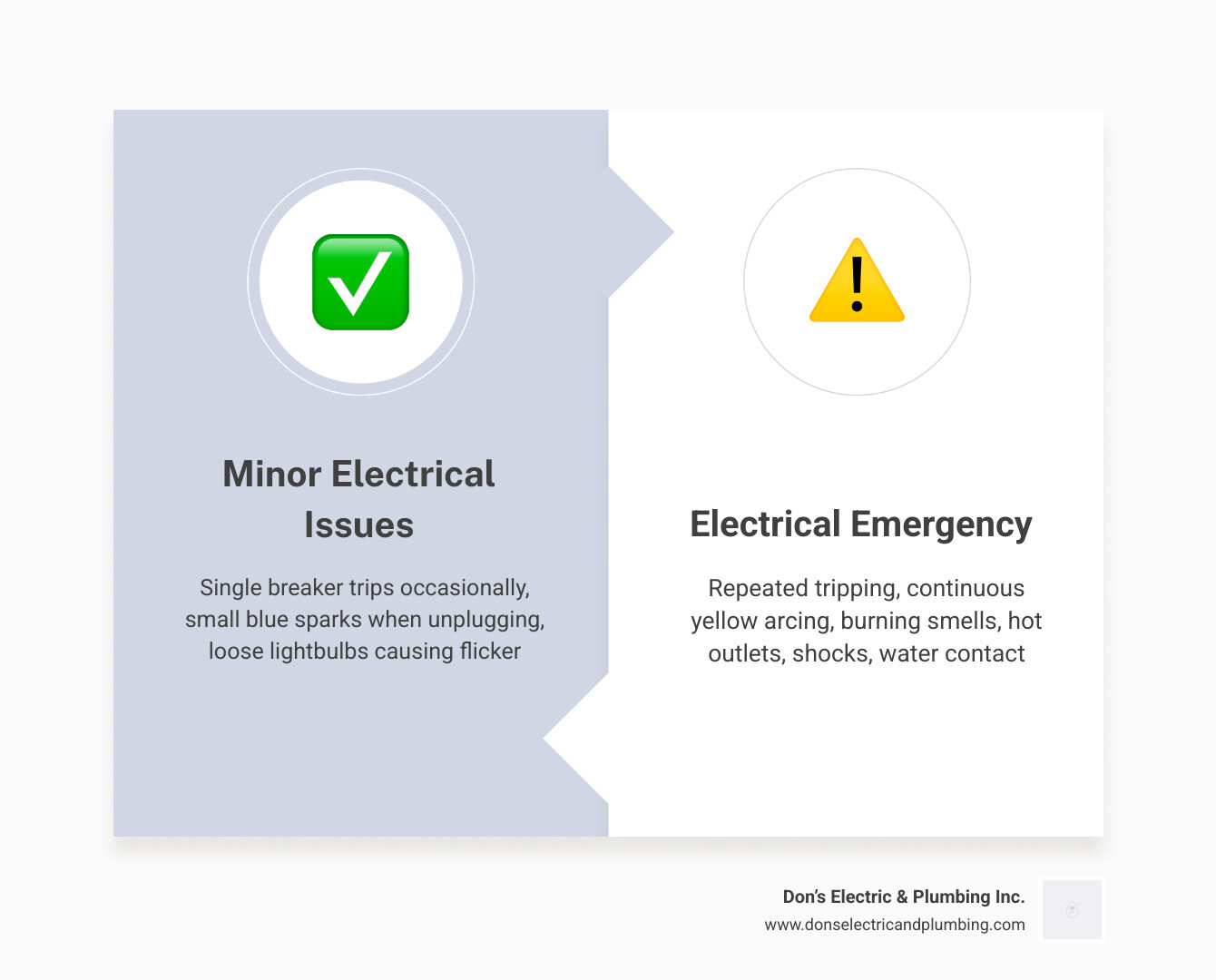
A minor issue is usually isolated and easily resolved, like a single breaker tripping because you ran a hair dryer and a space heater on the same outlet. An emergency involves systemic or dangerous symptoms, such as a breaker that trips repeatedly, constant flickering lights across multiple rooms, hot outlets, or any humming, sparking, or burning odors.
Conclusion
When it comes to your home’s electrical system, there is no room for compromise. Small warning signs like a faint burning smell, a humming breaker, or a warm outlet can quickly escalate into devastating electrical fires. Recognizing the signs you have an electrical emergency is the first step toward keeping your household safe.
Since 1984, Don’s Electric & Plumbing Inc. has been the trusted, family-owned and operated partner for homeowners throughout Canajoharie, NY, and the surrounding areas, including Montgomery, Fulton, Schoharie, Herkimer, and Hamilton counties. We are dedicated to keeping your home comfortable, functional, and safe. That is why we offer a 100% satisfaction guarantee, flexible financing options, and 24/7 emergency services to handle urgent hazards whenever they arise.
Attempting to fix complex wiring or panel issues on your own is highly dangerous and often illegal. Learn more about common electrical issues and why you legally can’t fix everything yourself. If you notice any warning signs in your home, don’t wait for things to get worse. Contact our friendly team at Don’s Electric & Plumbing Inc. today to schedule a professional inspection and keep your home safe.