


When Winter Storms Trigger a Furnace Safety Lockout
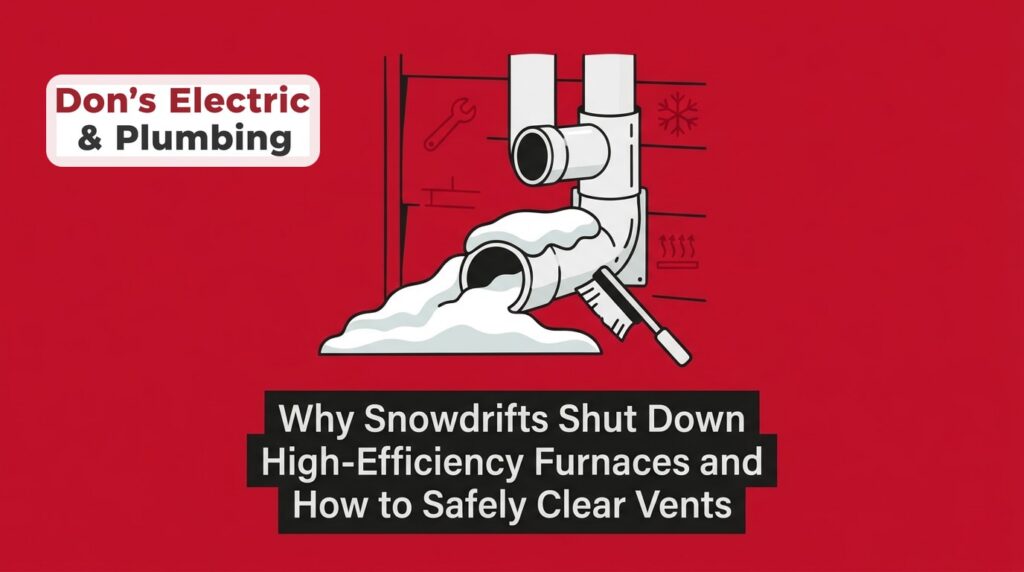
Your thermostat is dropping, the wind is howling outside, and you suddenly realize your heating system has shut down entirely—a stressful scenario that often points to a furnace exhaust pipe blocked by snow. When a heavy winter storm rolls through, losing heat is the last thing you want to deal with. You might immediately assume the internal machinery has broken down, but the culprit is frequently waiting just outside your exterior walls.
In our years of serving Canajoharie NY area homes, our team at Don’s Electric & Plumbing frequently sees the sudden reality of a heating system shutting down during heavy snowfall. High-efficiency condensing furnaces are uniquely vulnerable to exterior blockages because of how they vent. Unlike older systems that send hot gases up a tall vertical chimney, modern units vent horizontally through the side of your house, placing the pipes dangerously close to ground level.
When these low-profile exterior features get buried under heavy snowdrifts, your system is designed to shut off automatically. This creates a critical decision point for homeowners: identifying whether you are dealing with a simple exterior snow blockage that you can clear yourself, or a complex internal mechanical failure that requires professional intervention. Navigating this situation correctly is essential for restoring your airflow safely.
If you are exploring residential furnace services to understand why your system locked out, the first step is always diagnosing the exterior environment. With the specific challenge of Upstate NY and Canajoharie area heavy snowdrifts, a few inches of accumulation blown against the side of your house can completely cover your intake and exhaust pipes in a matter of hours. Understanding how this happens—and how your system reacts to protect you—is the key to getting your home warm again without unnecessary panic.
Understanding High-Efficiency Furnace PVC Venting
To understand why snow causes such a dramatic shutdown, it helps to know exactly what makes your heating system a “high-efficiency” unit. Older, standard-efficiency furnaces typically operate at around 80% efficiency, meaning 20% of the heat they generate escapes up a metal chimney as hot exhaust gas. High-efficiency condensing furnaces, on the other hand, operate at 90% to 98% efficiency. They achieve this by using a secondary heat exchanger to extract almost all the usable thermal energy from the combustion gases before they leave your house.
Because so much heat is extracted, the remaining exhaust gases are relatively cool. They are so cool, in fact, that they cannot naturally rise up a traditional metal chimney. Instead, they are blown out horizontally using a dedicated fan. Furthermore, because these cooler gases contain moisture that turns acidic, they would corrode a metal pipe. This is exactly why modern systems use durable, corrosion-resistant PVC pipes for venting.
| Feature | Standard Efficiency (80%) | High-Efficiency Condensing (90%+) |
|---|---|---|
| Venting Material | Metal flue pipe or masonry chimney | White or black PVC piping |
| Venting Direction | Vertical (through the roof) | Horizontal (through a side wall) |
| Exhaust Temperature | Very hot (rises naturally) | Cool (requires a fan to push out) |
| Snow Blockage Risk | Low (vents are high above ground) | High (vents are near ground level) |
Your high-efficiency system typically relies on two distinct PVC pipes located on the exterior of your home. The first is the fresh air intake pipe, which pulls clean, combustible air from outside into the burner chamber. The second is the exhaust gas pipe, which pushes the hazardous byproducts of combustion safely out of your home. Sometimes, these two functions are combined into a single concentric pipe (a pipe within a pipe), but the principle remains the same.
Because these pipes must exit through a side wall, they are often located just a few feet above the ground. This typical exterior placement makes them highly susceptible to ground-level snow accumulation, drifting, and plowing runoff. When these openings are compromised, the system cannot breathe. If you frequently experience these airflow interruptions and need professional guidance, reaching out to experienced furnace repair technicians can help you evaluate if your venting configuration needs adjustments for better winter resilience.
How Pressure Switches Prevent Carbon Monoxide Risks
When snow buries your exterior PVC pipes, your furnace doesn’t just struggle to run—it actively refuses to operate. This is not a malfunction; it is a highly engineered safety response triggered by a component called the pressure switch. The pressure switch is a small, vacuum-actuated safety device located inside the furnace cabinet. Its sole job is to monitor the draft (airflow) moving through the combustion chamber and the exhaust piping.
Here is exactly how the sequence plays out: When your thermostat calls for heat, the very first thing that turns on is the draft inducer motor. This fan creates a negative pressure (a vacuum) to pull fresh air in and push exhaust gases out. The pressure switch measures this vacuum. If the exterior exhaust pipe is blocked by a snowdrift, the exhaust gases have nowhere to go. They begin to back up inside the pipe, destroying the vacuum. The pressure switch immediately detects this lack of proper airflow and trips, cutting power to the ignition sequence and gas valve.
The extreme danger of carbon monoxide:
This mechanical trigger initiates a safety lockout for one critical reason: preventing carbon monoxide poisoning. If your furnace were allowed to burn fuel without a clear exhaust path, the deadly, odorless, colorless carbon monoxide gas would rapidly back up and spill directly into your living space. The pressure switch is the primary line of defense keeping your household safe.
Because Don’s Electric & Plumbing operates with a safety-first, family-owned approach, our team treats carbon monoxide risks as urgent family safety emergencies rather than mere mechanical nuisances. This is why we strongly emphasize that internal furnace mechanisms should never be tampered with by homeowners. Bypassing a pressure switch or attempting to force a locked-out furnace to run without addressing the exterior blockage is incredibly dangerous. The system is protecting you; your job is simply to clear the path outside so it can safely resume its work.
Signs Your Furnace Exhaust Pipe Is Blocked by Snow
Before you brave the freezing temperatures to check your exterior walls, you can often diagnose a snow-blocked vent by observing how your system behaves indoors. Recognizing the signs of a safety lockout can save you time and help you determine the right next steps.
Based on the emergency heating calls our technicians field every winter, here are the most common symptoms that indicate your system is struggling with an exterior blockage:
- The short-cycling start: You hear the furnace attempt to start—the inducer fan whirs to life—but within a few seconds, the system clicks and shuts down completely before any warm air reaches your vents.
- Flashing diagnostic lights: If you look through the small sight glass on your lower furnace panel, you may see an LED light blinking in a specific sequence (e.g., three short flashes). This is the control board communicating a pressure switch error or lockout code.
- Sudden loss of heat during a storm: The most obvious sign is a complete lack of heating that coincides directly with a heavy snowfall, high winds causing drifts, or immediately after a snowplow has cleared your driveway or street.
If you notice these symptoms, checking the exterior PVC pipes should be your very first diagnostic step. Do not immediately assume a mechanical breakdown has occurred inside the cabinet. Put on your winter gear, walk to the side of your house where the vents are located, and visually inspect the area. You are looking for snowdrifts that have piled up against the wall, or a hard crust of ice and snow that has formed directly over the vent openings.
If you find the pipes buried, clearing them will likely resolve the issue. However, if you inspect the exterior and find that the vents are completely clear, unobstructed, and free of ice, yet the system still refuses to ignite, it is time to stop troubleshooting. A clear pipe combined with a persistent lockout indicates an internal component failure. When dealing with troubleshooting heating failures that go beyond simple snow removal, bringing in a licensed professional is the only safe way to diagnose and repair the internal machinery.
Step-by-Step Guide to Safely Clearing Exterior Vents
If you have confirmed that a snowdrift is suffocating your heating system, clearing the blockage is usually a straightforward process. However, it must be done carefully to avoid damaging the PVC pipes, which can become brittle in extreme cold. Follow these steps to restore your airflow safely and effectively.
- Locate the intake and exhaust pipes: Walk around the exterior of your home to find the white or black PVC pipes exiting the wall. They are typically located on the side or rear of the house, relatively close to where the furnace sits in the basement or utility room. Some homes have two separate pipes; others have a single concentric pipe that handles both intake and exhaust.
- Use your hands or a soft broom: Gently brush the accumulated snow away from the PVC pipes. If the snow is light and fluffy, a standard household broom works perfectly. If the snow is wet and heavy, use gloved hands to carefully pull the snow away from the wall and the pipes.
- Clear a minimum 3-foot radius: Do not just poke a small hole in the snowdrift. You must clear a wide, 3-foot radius around the vents all the way down to the ground. This ensures adequate airflow, prevents exhaust gases from being immediately sucked back into the fresh air intake, and provides a buffer so the next gust of wind doesn’t instantly re-bury the pipes.
- Strictly avoid metal tools: Never use metal shovels, ice chippers, hammers, or heavy force near the PVC venting. Cold temperatures make plastic piping highly susceptible to cracking or shattering. Striking the pipe with a shovel can break it off at the wall, turning a simple snow clearing task into a major repair emergency.
- Check inside the pipe opening: Once the exterior is clear, shine a flashlight directly into the openings of the pipes. Look for any compacted snow, frost, or debris that might have been blown inside the lip of the pipe. If you see loose snow just inside the edge, carefully scoop it out with your fingers.

The Hidden Threat of Condensation and Ice Buildup
While loose snow is the most obvious culprit during a winter storm, our technicians frequently encounter a secondary risk that many homeowners miss: the silent threat of condensation freezing inside the pipe. High-efficiency exhaust is not just warm air; it is heavily laden with moisture. As this warm, wet exhaust gas travels through the PVC pipe and meets the freezing outside air, condensation occurs rapidly.
With Upstate NY’s deep freezes, this condensation can easily freeze upon contact with the cold plastic near the exit of the pipe. When a partial snowdrift blocks the wind but allows a small amount of exhaust to escape, it actually accelerates this ice buildup. The snow traps the moisture against the cold pipe, creating a thick crust of ice that slowly chokes off the opening from the inside out. Even after you brush the snow away, this interior ice collar can keep the pressure switch tripped.
Why You Must Never Use Hot Water
If you discover ice blocking the inside of your exhaust pipe, your first instinct might be to pour hot water over it to melt the blockage. Do not do this. Pouring hot water into a PVC exhaust pipe will simply send water running back down toward the furnace. Worse, in sub-freezing temperatures, that hot water will rapidly cool and refreeze deeper inside the pipe, creating an impenetrable ice plug that is impossible to reach from the outside.
Similarly, you must strictly avoid using sharp tools, screwdrivers, or ice picks to chip away ice inside the vent. One wrong move can puncture the PVC, leading to exhaust leaks inside your wall cavity. If you find a severe ice blockage that you cannot gently remove with your gloved fingers, it requires professional thawing and assessment. In these situations, seeking immediate furnace attention ensures the ice is safely melted using specialized equipment, and the pitch of the pipe can be checked to ensure proper drainage for the future.
Proactive Vent Marking for Reliable Winter Heating
The best way to handle a snow-blocked vent is to prepare for it long before the first snowflake falls. November pre-winter readiness is a critical time for homeowners to take proactive steps that prevent avoidable no-heat emergencies later in the season. Once a heavy storm hits and the ground is covered in two feet of white powder, locating a small, white PVC pipe becomes incredibly difficult, especially in the dark.
Our team highly recommends locating and visually marking your exterior vents during your fall yard cleanup. Over our years of helping homeowners prepare for the holidays, we’ve found that a simple, highly effective strategy is to purchase a tall, reflective driveway stake from a local hardware store. Drive this stake securely into the ground a few inches to the side of your PVC vents. When a blizzard hits, you won’t have to guess where to dig; the reflective marker will guide you directly to the critical airflow source.
Additionally, November is the perfect time to evaluate the landscaping around your heating system’s exterior components. Keep shrubs, bushes, and decorative grasses trimmed well away from the vent area. Dense vegetation not only restricts normal airflow but also acts as a snow fence, catching blowing snow and creating massive drifts directly over your pipes. By taking a few minutes to mark your vents and clear the surrounding area in the fall, you frame your winter preparation around peace of mind, ensuring that a simple snowstorm doesn’t turn into a freezing ordeal.
Frequently Asked Questions About Blocked Furnace Vents
Will a furnace shut off if the exhaust is blocked?
Yes, the pressure switch will detect the lack of airflow and immediately shut down the system to prevent carbon monoxide buildup. This is a built-in safety mechanism designed to protect your home. The furnace will remain in a lockout state and will not produce any heat until the blockage is completely removed and proper draft is restored.
What happens if snow blocks my furnace exhaust?
Your furnace will initiate a safety lockout, meaning it will stop producing heat until the blockage is cleared and airflow is restored. You may hear the inducer motor turn on briefly, followed by a click as the system shuts itself back down. The control board will typically flash a diagnostic code indicating a pressure switch failure.
How do I keep snow away from my furnace vent?
Regularly clear a 3-foot radius around the vent with a broom, and consider building a small, well-ventilated snow shield if local codes permit. The most effective strategy is proactive maintenance: check the vents after every major snowfall or high-wind event, and ensure no landscaping is trapping snow against the side of the house.
Where is my furnace exhaust pipe located outside?
It is typically a white or black PVC pipe exiting the side or back of your home, relatively close to the ground, near where the furnace is located indoors. Depending on your system’s design, you may see two separate pipes side-by-side (one for intake, one for exhaust) or a single larger pipe with a cap on the end.
Can I reset my furnace after clearing the snow?
Most modern furnaces will reset automatically once the blockage is cleared. The system will sense the restored airflow on its next heating cycle and ignite normally. If it doesn’t, you can try turning the furnace power switch (usually looking like a regular light switch near the unit) off and on once. However, repeated resets should be avoided, as this can trigger a hard lockout requiring professional service.
Restoring Your Home’s Heat Safely and Effectively
Waking up to a freezing house is never a pleasant experience, but understanding why your system reacted the way it did can take the panic out of the situation. Remember that a safety lockout is not a sign of a broken furnace; it is a sign of a furnace functioning exactly as it should to protect your family from harmful exhaust gases. When a furnace exhaust pipe blocked by snow triggers this shutdown, safely clearing the exterior snow with a broom and maintaining a wide buffer zone is often all it takes to restore your heat.
By marking your vents in November and knowing exactly what to look for during a storm, you can resolve these issues in minutes. However, if you have carefully cleared the exterior vents, checked for ice, and the system remains locked out, do not attempt to bypass internal safety switches. That is the time to seek professional help from Don’s Electric & Plumbing to ensure your system is diagnosed safely, getting your home warm and comfortable once again.