


Will Your Heating System Survive a Winter Grid Failure?
Is your home truly prepared for a prolonged power outage during a freezing winter night? When the grid goes dark in the dead of winter, having reliable heat is not just about comfort—it is about protecting your home from catastrophic damage like burst pipes and structural freezing. If you are looking at options comparisons for homeowners regarding backup power, you are likely weighing how to keep your ducted heating system running when the temperature drops.
For residents in Canajoharie and the greater Mohawk Valley, severe weather is a guaranteed part of the calendar. At Don’s Electric & Plumbing, our team has seen firsthand how the specific threat of Mohawk Valley lake-effect snow and rapid ice accumulation historically leads to prolonged grid failures. When heavy ice brings down power lines, the response time for utility crews can stretch from hours into days. Without electricity, even a gas-powered heating system will completely shut down.
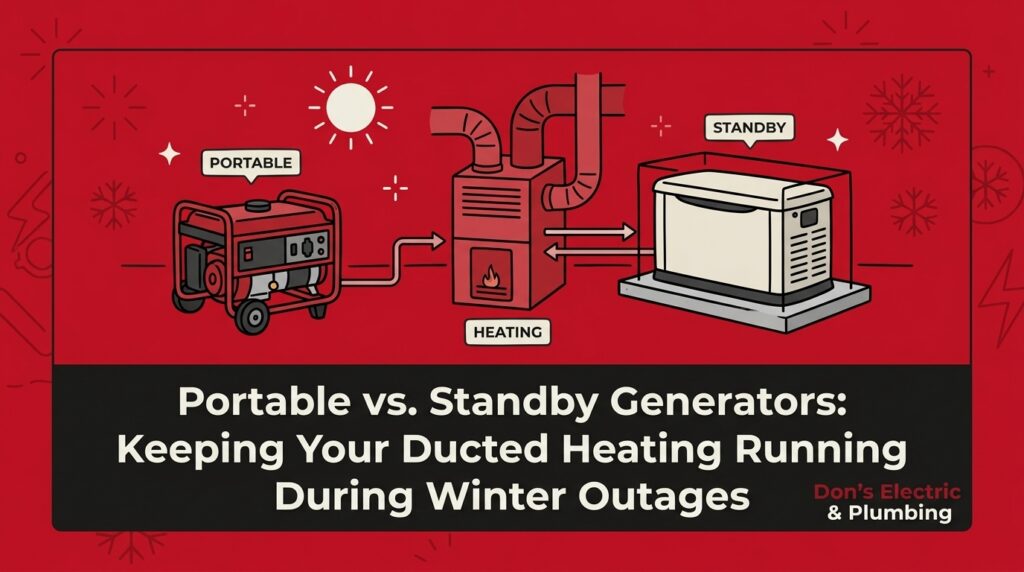
This creates a critical decision point for proactive homeowners: do you rely on a manual portable generator, or do you invest in an automatic standby unit? Planning for winter power continuity is just as important as scheduling your annual tune-ups. Integrating backup power considerations into your comprehensive HVAC maintenance plans ensures you are never caught off guard. By making the right choice now, you can avoid the panic of a freezing house and the need for emergency gas heater repair in Canajoharie when your system is pushed beyond its limits.
The Hidden Electrical Needs of Gas Heating Systems
In our years of diagnosing winter heating failures, we frequently find that most homeowners don’t realize a gas furnace is entirely dependent on the electrical grid to function. A common misconception we hear is that as long as the natural gas or propane is flowing, the house will stay warm. In reality, modern ducted heating systems are highly sophisticated appliances that require steady, clean electricity to operate safely and effectively.
A standard gas furnace typically requires between 400 and 800 watts of electricity to run its core components. To understand why backup power is non-negotiable, it helps to look at the sequence of operations that occurs every time your thermostat calls for heat:
- The Thermostat Signal: The process begins when the thermostat sends a low-voltage electrical signal to the furnace control board.
- The Draft Inducer Motor: The control board first sends high-voltage power to the draft inducer motor, which clears residual gases from the heat exchanger and ensures safe venting.
- The Igniter: Once the draft is confirmed, electricity powers the hot surface igniter or spark ignition system.
- The Gas Valve: Only after the igniter is ready does the electrical gas valve open to allow fuel into the burners.
- The Blower Motor: Finally, the high-capacity blower motor kicks on, pushing the heated air through your home’s ductwork.
If any of these electrical steps are interrupted by a power outage, the furnace’s safety mechanisms will lock the system out, leaving your home without heat. This is why evaluating your backup power strategy should be a core part of transitioning your HVAC system from cooling to heating before the severe cold weather hits.
A critical safety warning: Never attempt DIY electrical bypasses, such as splicing your furnace wiring into an extension cord, to power your heating system during an outage. These unlicensed modifications are incredibly dangerous, violate building codes, and can cause catastrophic electrical fires or permanent damage to your furnace’s sensitive control board.
Portable Generators: Pros, Cons, and Winter Realities
When assessing backup power, we often see portable generators as the first solution homeowners consider due to their lower initial barrier to entry. While they can be a lifesaver for running basic appliances during a summer storm, relying on a portable generator to power a ducted heating system during a Mohawk Valley winter introduces significant logistical and safety challenges.
The Advantages of Portable Units
- Lower initial investment: Portable units provide a cost-effective way to secure minimal backup power without a permanent installation.
- Mobility: They can be moved around the property or taken to different locations if needed.
- Versatility for minor loads: They are excellent for keeping a few lights on, charging phones, and running a space heater or refrigerator.
The Drawbacks and Winter Realities
- Manual setup in severe weather: Sub-zero blizzards make manual refueling and the outdoor setup of portable generators highly impractical. Dragging a heavy generator out of the garage, running heavy-duty extension cords through a cracked window or door, and trying to start a cold engine in the middle of an ice storm is physically demanding and dangerous.
- Fuel management challenges: Portable generators run on gasoline or small propane tanks, which have limited runtimes. During a multi-day outage, you will need to constantly brave the elements to refuel the unit, assuming local gas stations even have power to pump fuel.
- Carbon monoxide risks: If a portable generator is not properly distanced from the home—at least 20 feet away from windows, doors, and vents—carbon monoxide can quickly build up inside, leading to fatal consequences.
- Power quality issues: Many portable generators produce power with high Total Harmonic Distortion (THD). This “dirty” power is unstable and can easily fry the sensitive microprocessors inside modern furnace control boards. If your furnace board is damaged by unstable voltage, you will find yourself urgently needing furnace repair technicians just to get the system running again once the grid is restored.
Standby Generators: Seamless Protection for Sub-Zero Drops
For homeowners who cannot afford to lose heat during a winter storm, whole-home standby generators offer a fundamentally different level of protection. Our team recommends these permanently installed units because they are designed to manage the heavy electrical loads of a modern home automatically, without any manual intervention.
How Automatic Transfer Switches Work
The heart of a standby generator system is the Automatic Transfer Switch (ATS). This device continuously monitors the incoming voltage from the utility grid. The moment it detects a drop in power, the ATS automatically isolates your home’s electrical panel from the grid. Within seconds, it signals the standby generator to start. Once the generator is running at full speed, the ATS safely transfers your home’s electrical load to the generator. When utility power is restored, the process reverses seamlessly. You don’t have to lift a finger—even if you are asleep or away from home on vacation.
The Advantages of Standby Systems
- Continuous, hands-free fuel supply: Standby generators are plumbed directly into your home’s existing natural gas or liquid propane lines. This completely eliminates the need for manual refueling in the freezing cold.
- High-capacity output: Unlike portable units, a properly sized standby generator can simultaneously run your furnace blower, well pump, sump pump, refrigerator, and essential lighting.
- Clean, stable power: Standby units produce utility-grade power with very low THD, ensuring that the sensitive electronics in your ducted heating system operate safely without the risk of circuit board failure.
- Weatherproof enclosures: These units are housed in durable, weather-resistant enclosures that protect the engine and alternator from the harshest winter elements.

Why Backup Power is a Dual-Trade Project: Electrical and Gas Logistics
A common mistake we see homeowners make is treating a standby generator installation purely as an electrical project. In reality, achieving true winter backup power requires a deep understanding of both electrical systems and plumbing logistics. Because our team at Don’s Electric & Plumbing handles both the electrical switchover and the gas line sizing and plumbing integration in a single professional assessment, we see firsthand how crucial this dual-trade expertise is.
The Problem: Underestimating the Fuel Demand
When a standby generator activates during a winter storm, it draws a massive amount of fuel to generate electricity. At the exact same time, your gas furnace is pulling fuel to heat the home. If the gas piping running from your meter to these appliances is not properly sized to handle the simultaneous BTU (British Thermal Unit) demand, you will experience a severe drop in gas pressure.
The Cause: Undersized Gas Piping
Gas lines are meticulously calculated based on the total potential load of the home. If a contractor simply taps a new generator into an existing gas line without recalculating the total volume required, the system becomes starved for fuel. The generator might run fine on its own, but the moment the furnace kicks on, the pressure drops.
The Solution: Professional Dual-Trade Integration
Proper installation requires calculating both the electrical load of the furnace and the BTU requirements of the gas line. A dual-trade professional will evaluate your gas meter’s capacity, measure the pipe diameters, and determine if the manifold pressure can support both the heating system and the generator running at full capacity simultaneously. Unlicensed tapping of gas lines for generator fuel is not only illegal in most jurisdictions but also incredibly dangerous, leading to erratic appliance behavior, carbon monoxide risks, and total system shutdowns right when you need heat the most.
The Danger of Fuel Starvation
- Unstable Pressure Drops: How undersized gas piping causes pressure drops that affect every gas appliance in the home.
- System Lockouts: Why furnaces shut down if fuel pressure is unstable, triggering safety sensors that require a manual reset.
- Generator Surging: How a lack of fuel causes the generator engine to surge, producing erratic electrical voltage that can damage your home’s electronics.
Making the Choice Before the Ground Freezes: Options Comparisons for Homeowners
Timing is everything when it comes to securing your home’s winter backup power. Waiting until the first blizzard is forecasted is simply too late for a standby generator installation. Mid-fall, specifically during October pre-winter preparation, is the absolute latest you should be finalizing these decisions.
Once the ground freezes solid in Upstate New York, the logistical challenges of trenching for new gas and electrical lines multiply exponentially. Frozen ground requires heavier equipment, takes significantly longer to excavate, and complicates the process of laying the necessary conduit and gas piping safely below the frost line.
Every October, our technicians strongly advise homeowners to finalize their generator decisions alongside scheduling their seasonal furnace installation in Canajoharie or routine fall maintenance. Combining these assessments saves time and ensures your entire heating ecosystem is ready for the cold.
The Typical Dual-Trade Assessment Timeline
- The Initial Load Calculation: A professional evaluates your home’s electrical panel and calculates the exact wattage required to run your furnace, well pump, and essential circuits.
- The Gas Line Assessment: The plumber assesses your current gas meter and piping to ensure it can deliver the required BTUs for both the generator and the heating system.
- Permitting and Approvals: Your contractor files the necessary permits with the local municipality and utility company.
- Site Preparation and Trenching: Before the ground freezes, the site is leveled, the concrete pad is poured, and trenches are dug for the electrical conduit and gas lines.
- Installation and Integration: The generator is placed, the automatic transfer switch is wired into your home’s electrical system, and the gas lines are securely connected and pressure-tested.
- Final Testing and Commissioning: The system is tested under a simulated power outage to ensure the ATS triggers correctly and the furnace fires up without any fuel starvation issues.
Frequently Asked Questions About Winter Backup Power
Can a portable generator run a ducted gas furnace?
Technically, a portable generator can run a gas furnace if it produces enough wattage and stable voltage, but it requires a professionally installed manual transfer switch. You should never plug a furnace directly into an extension cord. Furthermore, many portable units produce “dirty” power (high THD) that can damage the furnace’s sensitive electronic control board.
What is the difference between a portable and standby generator for winter outages?
The primary difference is automation and fuel supply. A portable generator requires you to manually set it up outdoors, run cords, and constantly refill it with gasoline during a storm. A standby generator is permanently installed, runs on your home’s continuous natural gas or propane supply, and turns on automatically within seconds of a power failure.
What size generator do I need to keep my pipes from freezing?
To keep pipes from freezing, you need a generator sized to handle the starting wattage of your furnace’s blower motor and draft inducer, plus any well pumps or space heaters. For a typical home, this usually requires a minimum of 5,000 to 7,500 watts just for essential heating, but a professional load calculation is mandatory to ensure safe operation.
Will a standby generator automatically turn on my heat during an outage?
Yes. Because a standby generator is wired directly into your home’s electrical panel via an automatic transfer switch, it restores power to your entire home—or selected essential circuits—within seconds. Your thermostat will remain powered, and your furnace will continue its normal heating cycles without any manual intervention.
Why do I need a plumber to install a standby generator?
Standby generators run on natural gas or liquid propane, meaning they must be physically plumbed into your home’s fuel supply. A licensed plumber is required to calculate the BTU load, ensure the gas pipes are properly sized to prevent fuel starvation to your furnace, and safely run the new lines according to strict building codes.
Secure Your Home’s Heating Continuity This Season
Keeping your home warm during a severe winter outage requires more than just a quick fix; it requires safe, integrated power and fuel solutions. Understanding the operational differences between options comparisons for homeowners helps protect your property from the catastrophic damage of frozen pipes and prolonged freezing temperatures.
You do not have to navigate these complex electrical and plumbing requirements alone. By evaluating your home’s unique footprint early in the season, you can implement a backup power strategy that operates seamlessly when you need it most. Schedule a professional, dual-trade evaluation today to weigh your options safely, ensuring your family stays warm, comfortable, and protected no matter what the winter weather brings.