


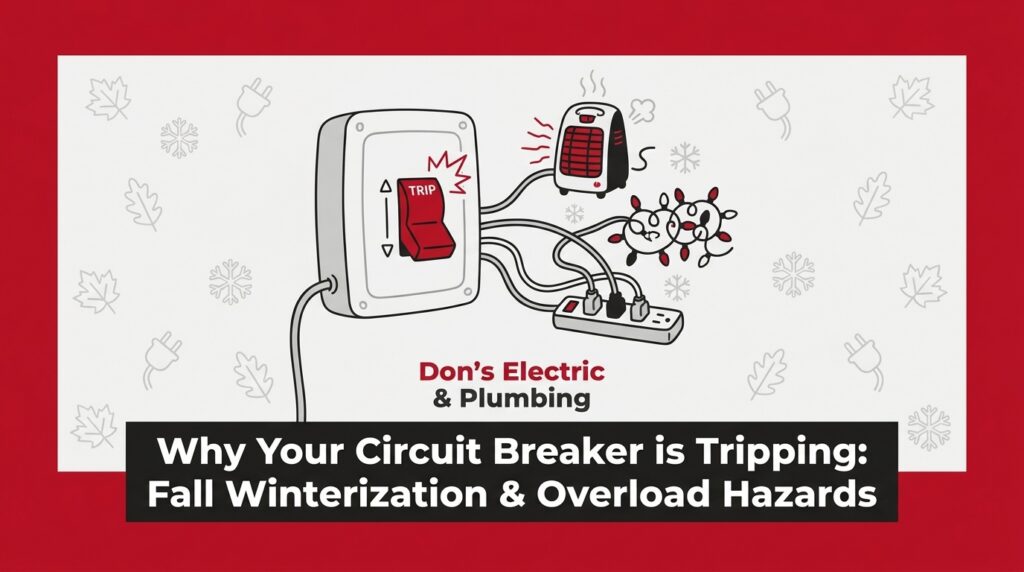
The October Freeze: Why Your Electrical System is Suddenly Under Strain
With the first hard freeze of October just weeks away, getting a head start on home maintenance tips and troubleshooting can save you from a cold, dark night when you need your heating systems the most. The sudden arrival of freezing temperatures drastically changes how your home consumes energy. Almost overnight, ceiling fans and open windows are replaced by heavy-duty space heaters, electric blankets, and plumbing heat tape. This abrupt transition places immense strain on your home’s infrastructure. Here at Don’s Electric & Plumbing, we see firsthand how early cold snaps in Canajoharie and the surrounding areas frequently catch homeowners off guard, exposing the hidden vulnerabilities of aging electrical systems and exposed plumbing elements.
For many homeowners, a tripped breaker seems like a minor annoyance. However, determining whether you are dealing with a normal tripped breaker from a single overloaded outlet or a systemic issue is a vital decision point. If a breaker trips once because you ran a vacuum and a heavy-duty heater on the same circuit, our team generally advises that a simple reset might be all you need. But if the problem persists, your electrical panel is sending you a clear warning that it cannot handle the seasonal load.
The quick fix: If you are dealing with persistent power interruptions during the October pre-winter chill, professional electric repair services are the safest path forward. We always tell our customers to never ignore a breaker that refuses to stay on; instead, call a professional electrician to inspect the system before the true winter weather settles in.
The Anatomy of a Circuit Breaker Trip During Colder Months
The Problem: As the temperature drops, you might find yourself walking to the basement or garage to reset a tripped breaker more often than you did all summer. This interruption is frustrating, especially when it cuts power to the room you are trying to keep warm.
The Cause: To understand why this happens, you have to look at what a circuit breaker actually does. It acts as a safety valve for your home’s wiring. Wires can only carry a specific amount of electrical current before they start to overheat. If a wire gets too hot, its insulation can melt, leading to an electrical fire. The breaker is designed to monitor this current and shut the power off—or “trip”—the moment the electrical draw exceeds the safe limit. The sudden transition to indoor, heat-generating appliances creates a perfect storm for electrical panels, leading to an electrical overload.
The Solution: The best way to resolve this is by understanding the different types of electrical faults that trigger your breaker during the October pre-winter and first hard freeze. As our technicians will tell you, not all tripped breakers are caused by the same underlying issue.
| Type of Electrical Fault | What It Means | Common Fall/Winter Causes |
|---|---|---|
| Electrical Overload | You are asking the circuit to provide more power than it is rated to safely carry. | Running a space heater, a television, and lamps on the same 15-amp circuit. |
| Short Circuit | A hot wire is touching a neutral wire, creating a massive, dangerous surge of uncontrolled current. | Chewed wires from rodents seeking winter shelter, or frayed cords on older heating devices. |
| Ground Fault | Electricity is escaping its intended path and traveling directly to the ground (or through a person). | Moisture from melting autumn snow getting into outdoor outlets or holiday light connections. |
Space Heaters: The Hidden Culprit in Historic Homes
One of the most frequent reasons your power shuts off in the late fall comes down to one small, innocent-looking appliance: the portable space heater. According to data from the National Fire Protection Association (NFPA), space heaters account for more than two-fifths of home heating fires. The reason they are so hazardous is closely tied to how much continuous electrical current they demand to generate heat.
A standard space heater typically draws around 1,500 watts of power. On a standard 15-amp household circuit, that single heater uses roughly 12.5 amps of the available capacity. If you have a lamp, a television, or a computer plugged into that same circuit, you will instantly push the wiring past its safe limit, causing the breaker to trip. Our electricians find this to be a massive problem in older Mohawk Valley and Canajoharie homes, where the electrical infrastructure was designed decades before these high-draw devices became common.
Why Older Panels Struggle with Modern Heating
In our years of servicing local homes, we’ve noticed that many historic properties in the region still operate on 60-amp or 100-amp electrical panels. While these panels were perfectly adequate in the mid-20th century, they struggle to keep up with the demands of modern supplemental heating. Historic home wiring simply was not designed to carry the heavy, continuous loads that today’s appliances require.
If your older panel is being overtaxed, our team typically sees a few distinct warning signs before the breaker actually trips:
- Dimming or flickering lights: Especially noticeable when a heater or motor turns on.
- Warm switch plates: The plastic covers over your outlets or light switches feel warm to the touch.
- Buzzing sounds: A faint humming or buzzing noise coming directly from the breaker box.
- Discolored outlets: Faint scorch marks or a yellowing of the plastic around the outlet slots.
To use supplemental heating safely, we highly recommend always plugging the unit directly into a wall outlet. Never use an extension cord or a power strip, as these are not rated for the continuous high current of a heating element and can easily melt or catch fire.

The Plumbing-Electrical Overlap: Heat Tape and Pipe Heaters
The Problem: When preparing for the deep freeze, homeowners naturally focus on protecting their plumbing. Frozen pipes can burst, causing catastrophic water damage. To prevent this, many people install electrical heat tape or pipe heaters along exposed plumbing lines in crawlspaces or basements. However, this creates a hidden electrical burden.
The Cause: Winterizing plumbing systems with heat tape adds an unexpected, continuous load to your electrical system. Because these devices are usually installed out of sight, they are easily forgotten. When the October pre-winter chill hits, the thermostat on the heat tape triggers it to turn on. If that heat tape is plugged into a circuit that also powers indoor lighting or appliances, the combined load will instantly trip the breaker. Furthermore, old, frayed, or improperly installed heat tape on exposed pipes is a massive fire hazard. As the insulation on the tape degrades over the years, the exposed heating elements can short circuit against the metal plumbing or nearby wood framing.
The Solution: Protecting your home requires a holistic approach. Because Don’s Electric & Plumbing is a family-owned, multi-trade company, you benefit from a team that understands exactly how your home’s systems interact. By evaluating both the plumbing (identifying pipe vulnerability) and the electrical system (calculating load capacity), we ensure that protecting your pipes doesn’t inadvertently create an electrical fire hazard.
Before the cold weather sets in permanently, our team recommends taking time to inspect these elements in your older Mohawk Valley or Canajoharie home:
- Visually inspect all heat tape for cracks, fraying, or exposed wires.
- Ensure the tape is not overlapping itself, which can cause it to overheat and melt.
- Verify that the heat tape is plugged into a dedicated outlet that is not sharing a circuit with heavy indoor appliances.
- Test the GFCI outlet where the heat tape is plugged in to ensure the safety mechanism is functioning properly.
Short Circuits and Ground Faults in Wet Fall Weather
While overloads from heating devices are common, the transition into late fall brings another set of challenges related to the weather. Autumn rains and melting early snows can lead to significant moisture ingress in outdoor outlets, exterior lighting fixtures, and exposed wiring. Our team knows from experience that the wet, freezing-and-thawing cycle typical of Upstate NY falls is incredibly tough on outdoor electrical seals. As water freezes, it expands, pushing apart the weatherproof gaskets on your exterior receptacles. When it thaws, rain and melting snow seep directly into the electrical box.
This moisture intrusion is the primary reason Ground Fault Circuit Interrupters (GFCIs) trip more frequently during wet weather. A GFCI is designed to measure the current going out and the current coming back. If even a tiny fraction of a milliamp escapes—usually by traveling through water—the GFCI shuts the power off in a fraction of a second to prevent electrocution.
Common weather-related electrical faults we tell homeowners to watch for:
- Outdoor seasonal decorations: String lights and inflatable yard decorations are frequently exposed to standing water, causing immediate ground faults.
- Engine block heaters: Plugging in a vehicle block heater using a worn-out extension cord lying on wet autumn leaves is a recipe for a short circuit.
- Degraded weatherproofing: Cracked plastic covers on exterior outlets allow driving autumn rain to soak the receptacle wiring.
If you notice that your outdoor lights or garage outlets lose power every time it rains, it is a strong indicator that moisture is breaching your electrical system. Addressing these issues early with professional electric repair in Summit NY and the surrounding areas ensures your exterior circuits remain safe and functional throughout the wettest parts of the season.
Safe Troubleshooting vs. When to Stop
When the power goes out in a specific room during the October pre-winter freeze, it is natural to want to fix the problem immediately. However, knowing the boundary between safe homeowner maintenance and dangerous electrical work is critical—especially in the older Canajoharie homes our team regularly services, where aging wiring may be fragile.
If a breaker trips, we recommend following these safe troubleshooting steps:
- Turn off and unplug devices: Go to the room that lost power and unplug the heavy-draw appliances, such as space heaters, window air conditioning units (if still installed), or large vacuums.
- Locate the tripped breaker: Open your electrical panel. The tripped breaker will usually be sitting in the middle position, between “ON” and “OFF”.
- Reset the breaker once: Firmly push the breaker switch all the way to the “OFF” position until you hear a click, then push it back to the “ON” position.
If the breaker stays on, you likely experienced a simple overload. You will need to move your heavy appliances to different circuits to prevent it from happening again. However, if the breaker immediately trips again the moment you reset it, stop immediately. The breaker is doing its job to prevent a fire. Repeatedly forcing a breaker to stay on can destroy the internal safety mechanisms and cause the wiring inside your walls to combust.
You must call an expert if you experience any of the following definitive signs of a serious electrical failure:
- The breaker will not reset or feels spongy and loose when you push it.
- You smell a burning, fishy, or metallic odor near the electrical panel or wall outlets.
- You see visible scorch marks or melted plastic around any receptacles.
- You hear a distinct crackling or buzzing sound coming from the breaker box.
Please remember: opening the internal electrical panel cover or attempting to replace a breaker yourself is strictly for licensed professionals. The main lugs inside a panel remain energized even if the main breaker is turned off, and touching them can be fatal. For a deeper understanding of these risks, reviewing the signs of fall winterization and overload hazards can help you identify when to step back and call for help.
Preparing Your Home’s Infrastructure for the Deep Freeze
A tripping circuit breaker is rarely just a random glitch; it is a clear symptom of a home struggling to adapt to seasonal demands. As the October pre-winter first hard freeze approaches, your home’s infrastructure is tested by the sudden shift to indoor heating and plumbing protection. Ignoring these early warning signs often leads to more severe, systemic failures when the true winter weather arrives.
Taking the time to assess both your heating loads and your plumbing winterization tools before the cold sets in permanently is the smartest way to protect your property. By understanding the limits of older electrical panels and the hidden burdens of heat tape, you can make informed decisions about how to safely keep your home warm. Upgrading an overtaxed panel to safely handle modern heating elements or heat pumps may even qualify you for federal tax credits or utility incentive programs, so we always advise verifying current programs with your utility provider or a tax professional.
If you are unsure whether your current panel can handle the upcoming winter safely, do not wait for an emergency to find out. Scheduling a pre-winter inspection with Don’s Electric & Plumbing provides clear guidance on identifying specific seasonal vulnerabilities in older homes. Knowing exactly when to call a professional for winterization ensures that your home remains a safe, warm haven throughout the coldest months of the year.
Frequently Asked Questions
Why does my circuit breaker keep tripping in the fall?
Your breaker is likely tripping because of a sudden increase in electrical demand as the weather cools. In the fall, homeowners start plugging in space heaters, electric blankets, and plumbing heat tape. These devices draw a massive amount of continuous current, easily overloading standard 15-amp or 20-amp circuits that were previously only handling lights and small electronics.
Is it dangerous if a breaker keeps tripping?
Yes, our electricians always warn that a breaker repeatedly tripping is a serious safety warning. The breaker is designed to shut off power when the wires are drawing more current than they can safely handle, which prevents them from overheating and starting a fire. If you continuously force a tripping breaker back on, you risk melting the wire insulation inside your walls and causing an electrical fire.
Why does my space heater trip the circuit breaker?
Space heaters require a massive amount of electricity to generate heat, often drawing up to 1,500 watts on their own. This consumes nearly the entire capacity of a standard household circuit. If you have any other devices, such as a television, lights, or a computer, running on that same circuit simultaneously, the combined load will exceed the safety limit and trip the breaker.
How do I know if my electrical panel can handle winter heating?
You can identify an overtaxed panel by looking for common warning signs like dimming lights when appliances turn on, buzzing sounds from the breaker box, or warm switch plates. Older homes with 60-amp or 100-amp service panels are particularly vulnerable to modern heating loads. A professional inspection by our team is the definitive way to calculate your home’s total electrical load and ensure your panel is adequately sized.
Can plumbing heat tape cause an electrical overload?
Absolutely. Plumbing heat tape acts as a continuous draw on your electrical system to keep pipes from freezing. If the heat tape is plugged into a circuit that also powers heavy indoor appliances, the combined electrical demand can easily overload the circuit. Furthermore, old or damaged heat tape can cause short circuits, instantly tripping the breaker.
Is it safe to keep resetting a tripped breaker?
No, it is never safe to repeatedly reset a breaker that trips immediately after being turned back on. You can safely reset a breaker once after unplugging the heavy appliances on that circuit. If it trips a second time, you must leave it off and call a licensed professional to diagnose the underlying fault.