


The Myth of Universal Flood Protection During Power Outages
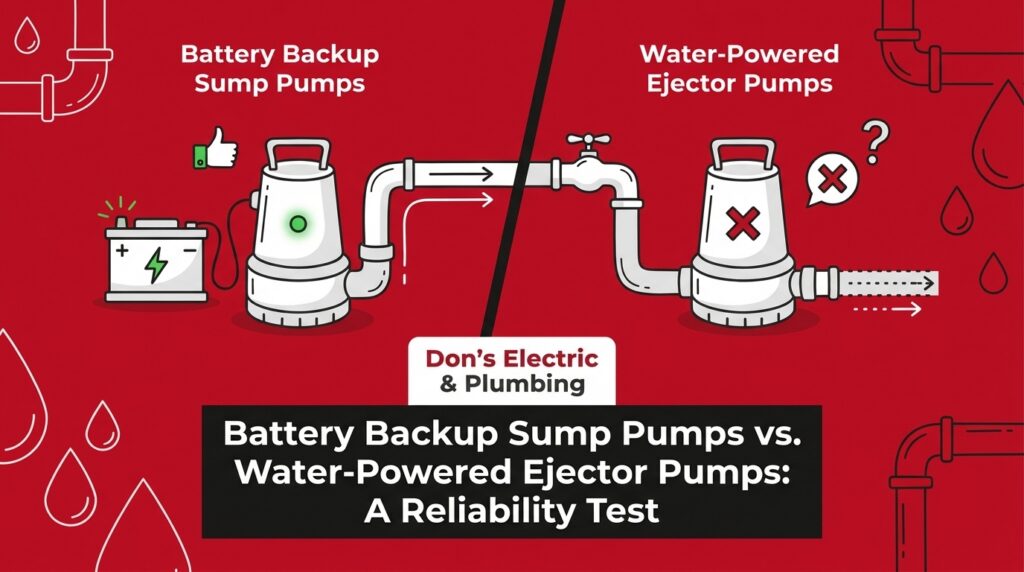
A widespread myth among homeowners is that installing any type of backup sump pump automatically guarantees a dry basement when the electrical grid fails. Many believe that as long as there is a secondary unit in the pit, their home is fully protected from rising water. However, if you are conducting a Battery Backup Sump Pumps vs. Water-Powered Ejector Pumps: A Reliability Test for your own property, the most critical realization is that not all backup systems operate universally. At Don’s Electric & Plumbing, a pattern we see often is homeowners guessing on their backup system instead of matching it to their home’s specific water infrastructure to ensure it actually functions when they need it most.
Preparing for the early fall storm season requires more than just reading generic plumbing repair tips. It requires a strategic assessment of your home’s capabilities to prevent the sudden need for emergency plumbing repair. The primary decision point comes down to choosing between the infinite run-time of a water-powered system and the high-volume clearing power of a battery unit. Making the wrong choice can leave you with a flooded basement and a useless piece of equipment sitting in the sump pit.
The Infrastructure Reality Check: Municipal vs. Well Water
Before looking at pump specifications, the mandatory first step is assessing your home’s primary water source. This single factor often dictates which backup system is viable for your property.
The Vulnerability of Electric Well Pumps
For many properties our team services, especially Canajoharie and surrounding Mohawk Valley homes, well water is the standard. Homes relying on electric well pumps face a unique vulnerability during severe early fall weather. The moment the power goes out, the well pump stops functioning. This means the house instantly loses all water pressure. You cannot flush toilets, run faucets, or operate any appliance that relies on pressurized water entering the home.
Why Water-Powered Systems Fail on Well Water
Because a water-powered backup sump pump relies entirely on pressurized incoming water to create suction, it becomes completely useless during an electrical outage if you are on well water. The very event that knocks out your primary electric sump pump—a grid failure—also knocks out the water pressure needed to run the water-powered backup. Installing a water-powered system in a well-water home provides zero flood protection during a blackout.
The Municipal Supply Advantage
Conversely, homes connected to a municipal water supply typically maintain steady water pressure even when the local electrical grid is down. Municipal water towers use gravity to maintain line pressure, meaning the water keeps flowing into your home regardless of localized blackouts. For these homes, leveraging that uninterrupted pressure becomes a highly viable strategy for basement flood defense.
Battery Backup Sump Pumps: High-Volume Clearing Power
For homes on well water, or properties that experience rapid and heavy flooding, our technicians recommend battery backup systems as the non-negotiable choice. These systems rely on high-capacity, marine-grade batteries to power a secondary 12-volt or 24-volt pump when the main AC power fails.
Understanding Battery Run Times and Capacity
The biggest concern homeowners have with battery systems is longevity. How long will the pump actually run before the battery dies?
- Continuous operation: During extreme flooding where the pump runs non-stop, a standard marine battery provides roughly 5 to 7 hours of continuous pumping.
- Intermittent operation: In typical storm conditions where the pump cycles on and off as the pit fills, a fully charged system can protect a basement for 1 to 3 days.
- High Gallons Per Minute (GPM): Battery backups are designed to move a massive volume of water quickly. They can often match or closely rival the clearing capacity of your primary pump, making them essential for heavy influxes of water.
Marine-Grade Batteries and Maintenance Needs
Battery systems require dedicated upkeep. They do not use standard car batteries; they use deep-cycle marine batteries designed to be discharged and recharged repeatedly. Over time, these batteries degrade. Even with a high-quality trickle charger maintaining the system, our team typically advises that the battery itself generally needs to be replaced every three to five years to ensure peak reliability. Regular maintenance involves checking water levels in flooded lead-acid batteries (if applicable) and cleaning terminal connections to prevent corrosion.
When Battery Power is the Only Option
If your home relies on well water, a battery backup is your only reliable defense during an outage. Furthermore, if your basement sits in an area with a high water table where the sump pit fills every few minutes during a heavy rainstorm, the high clearing capacity of a battery system is crucial. A slower system simply might not keep up with the rapid influx of groundwater.
Water-Powered Ejector Pumps: Infinite Run-Time (With a Catch)
For homes connected to municipal water, a water-powered ejector pump offers a fascinating alternative. Instead of relying on electricity or batteries, these clever devices use the physical properties of fluid dynamics to empty your sump pit.
The Mechanics of Venturi Suction
Water-powered pumps operate using the Venturi effect. Municipal water is piped directly into the pump. As this pressurized water is forced through a narrow nozzle inside the unit, it creates a pressure drop—a vacuum. This suction pulls the groundwater out of the sump pit, mixing it with the municipal water, and discharging both safely outside your home. Typically, these systems remove roughly 2 gallons of sump water for every 1 gallon of municipal water used.
The Advantage of Infinite Run-Time
The massive advantage of a water-powered system is its theoretical infinite run-time. Because it does not rely on a battery that will eventually drain, it can run continuously for days or even weeks during a prolonged electrical grid failure. As long as the municipal water tower has water and the pipes remain pressurized, your basement stays dry.
Strict Municipal Pressure Requirements
However, this infinite run-time comes with strict operational requirements:
- Minimum PSI thresholds: A water-powered pump requires strong, consistent municipal water pressure to create effective suction. A minimum of 40 to 60 PSI at the pump is mandatory.
- Pipe diameter constraints: The home’s incoming water line must be large enough (usually 3/4-inch minimum) to deliver the necessary volume of water without pressure drops.
- Lower GPM capacity: While they run forever, water-powered pumps generally move water slower than battery systems. They are excellent for steady, moderate water intrusion but can sometimes struggle against sudden, violent flash flooding.
Utility and Environmental Considerations
It is also important to note the environmental and utility impact. Because the system uses clean municipal drinking water to drive the suction, running the pump for several days will result in a noticeably higher water bill for that billing cycle. In our experience, for most homeowners, this is a small trade-off compared to the cost of a flooded basement, but it remains a factor to consider.
Head-to-Head Comparison: Which Backup System Wins?
To simplify the decision-making process, here is a direct, scannable decision matrix contrasting the two systems across critical performance metrics.
| Feature / Metric | Battery Backup Sump Pump | Water-Powered Ejector Pump |
|---|---|---|
| Power Source | Deep-cycle marine battery (12V or 24V) | Municipal water pressure (Venturi effect) |
| Outage Longevity | 1 to 3 days of intermittent cycling | Infinite (as long as city pressure holds) |
| Clearing Capacity (GPM) | High (excellent for rapid, heavy flooding) | Moderate (removes 2 gallons per 1 city gallon) |
| Infrastructure Rule | Works on both well water and municipal setups | Requires municipal water (40-60 PSI minimum) |
| Ongoing Maintenance | Battery replacement every 3-5 years | Periodic valve testing and filter checks |

Why Backup Pump Installation Demands a Multi-Trade Approach
A common mistake homeowners make is assuming that upgrading a sump pit is a simple weekend project. In reality, modern backup systems are highly complex and intersect multiple skilled trades. Attempting a DIY installation can lead to catastrophic failures, voided warranties, and even municipal code violations.
Electrical Requirements for Battery Systems
Battery backup systems require dedicated electrical circuits. If you plug a high-draw primary pump and a heavy-duty battery trickle charger into the same standard outlet, you risk tripping the breaker during a critical moment. A tripped breaker means neither pump will operate, defeating the entire purpose of the system. Professional electricians must often run new, dedicated lines to the basement to ensure the electrical load is safely distributed and the system remains isolated from other household appliances.
Plumbing and Backflow Prevention
Water-powered pumps present an entirely different set of challenges. Because these units connect directly to your home’s clean municipal drinking water supply, they require complex plumbing connections. Specifically, they mandate the installation of specialized backflow prevention devices. These valves ensure that dirty, contaminated sump pit water cannot accidentally siphon backward into your home’s potable water pipes if the municipal pressure drops unexpectedly. Improper installation of these valves is a serious health hazard and a violation of local plumbing codes.
The Multi-Trade Advantage
Coordinating separate electricians and plumbers for a single basement upgrade can be a logistical nightmare. Working with a company like Don’s Electric & Plumbing that offers multi-trade capabilities—having licensed plumbers and electricians under one roof—makes installing either complex backup system seamless and safe. Whether the job requires running a new electrical circuit for a battery system or soldering in a backflow preventer for a water-powered unit, having a unified team ensures the entire system is integrated flawlessly. This comprehensive approach is particularly valuable when scheduling plumbing repair in Esperance or preparing for seasonal weather shifts.
Preparing Upstate Basements for Grid Failures
Timing is everything when it comes to basement defense. Waiting until the ground freezes or the power is already out to discover your primary pump has failed is a recipe for disaster.
The Threat of Simultaneous Outages and Influxes
Heavy early fall storms in the Mohawk Valley create the perfect storm of high water tables and vulnerable electrical grids. Saturated grounds lead to rapid water influx into foundation drains, while high winds and falling branches frequently take down power lines. This simultaneous combination of high water and no electricity makes the early fall storm season the critical window for proactive installation.
Assessing Your Infrastructure
Before the severe weather hits, we highly recommend scheduling an infrastructure assessment. A professional can measure your home’s exact municipal PSI to determine if a water-powered system is viable, or assess your electrical panel’s load capabilities to support a robust battery system. Understanding how sump pumps defend your basement during fall rainstorms is only half the battle; ensuring the system is properly matched to your home’s specific infrastructure is what actually keeps the water out.
Secure Your Basement Before the Next Outage
Ultimately, the goal is peace of mind. Knowing that you have a reliable, infrastructure-matched backup system standing guard in your basement alleviates the stress of watching the weather forecast. Proper installation prevents disastrous basement flooding, protects your foundation, and secures your stored belongings. Don’t wait for the lights to flicker to wonder if your pump will hold up. Reach out to our licensed professionals today for a comprehensive assessment and secure your home before the next major outage strikes.
Frequently Asked Questions
Can I use a water-powered sump pump if I have well water?
No, a water-powered sump pump is virtually useless for homes on well water during a power outage. Because electric well pumps lose all pressure when the grid goes down, there is no pressurized water available to drive the backup pump’s suction. Homes on well water must rely on battery backup systems for flood protection during blackouts.
How long will a battery backup sump pump run during a power outage?
A standard marine-grade battery backup system typically provides 5 to 7 hours of continuous pumping. If the pump is cycling intermittently as the pit slowly fills, a fully charged battery can protect your basement for 1 to 3 days. Upgrading to a dual-battery system can effectively double this run time.
Are water-powered sump pumps better than battery backup?
Neither system is universally better; they serve different infrastructure types. Water-powered pumps are excellent for homes with strong municipal water pressure because they offer infinite run-time without degrading batteries. However, battery backups are essential for homes with well water or those that experience rapid, high-volume flooding that requires maximum clearing capacity.
What is the minimum municipal water pressure needed for a water-powered pump?
Most water-powered ejector pumps require a minimum of 40 to 60 PSI at the pump to operate effectively. If your home’s incoming water pressure falls below this threshold, the pump will not generate enough suction to clear the sump pit, making a battery backup a safer alternative.
Why do I need both an electrician and a plumber to install a backup sump pump?
Backup systems require expertise in two distinct trades to ensure safety and code compliance. Battery systems often require an electrician to install dedicated circuits to prevent overloaded breakers, while water-powered systems require a plumber to install specialized backflow prevention valves on your home’s potable water lines. Relying on a multi-trade professional ensures both aspects are handled safely.