


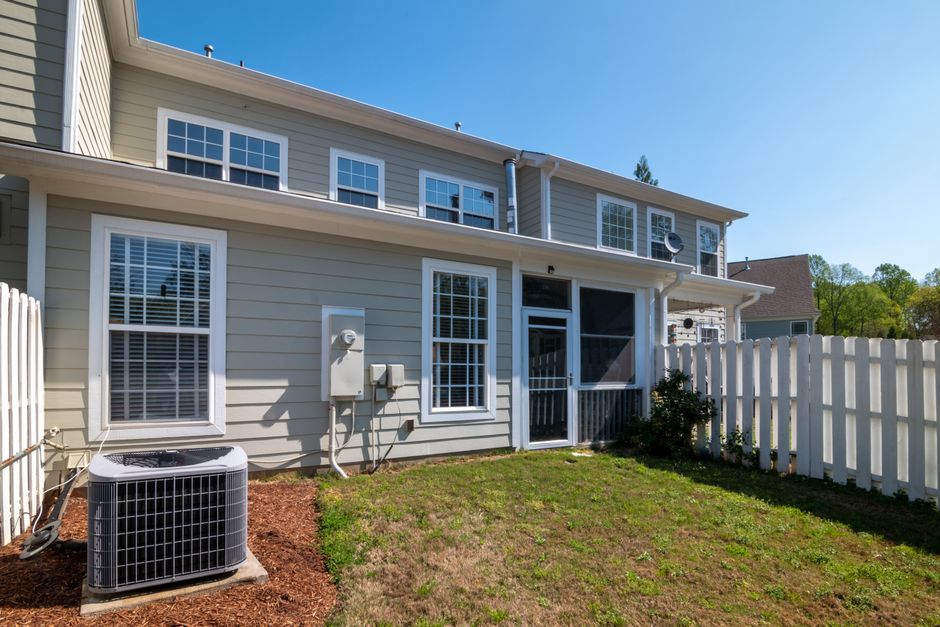
Understanding System Types in Your Central AC Buying Guide for Homeowners
When you start your journey using a central ac buying guide for homeowners, the first fork in the road is deciding which physical configuration fits your home’s structure. Not every house in Canajoharie or Little Falls is built the same, so the “best” system depends entirely on your existing setup.
Ducted Split Systems
This is the most common type of central air conditioning. It “splits” the components into two main parts: an outdoor metal cabinet containing the condenser and compressor, and an indoor cabinet containing the evaporator coil. Usually, the indoor part sits on top of your furnace or inside a dedicated air handler. It uses your home’s ductwork to distribute air. If you already have a forced-air furnace, this is often the most straightforward AC Installation Service Canajoharie NY option.
Packaged Units
In a packaged system, the compressor, condenser, and evaporator are all housed in one large outdoor cabinet, usually placed on a roof or a concrete slab next to the foundation. These are popular for homes with limited indoor space, such as those without a basement or crawlspace. The cooled air is sent indoors through ducts that pass through the exterior wall or roof.
Ductless Mini-Splits
If your home was built before the 1970s—when central air became widely available—you might not have ductwork at all. Instead of tearing apart your walls to install bulky metal vents, a ductless mini-split uses small indoor units mounted on the wall or ceiling. These are connected to an outdoor compressor by a small conduit. They are incredibly efficient and allow for “zoning,” meaning you can cool the living room while leaving the guest room off.
| System Type | Best For… | Key Advantage |
|---|---|---|
| Ducted Split | Homes with existing furnaces/ducts | Seamless integration and whole-home coverage |
| Packaged Unit | Homes with no basement or attic space | All-in-one footprint saves indoor square footage |
| Ductless Mini-Split | Older homes, additions, or specific zones | No ductwork needed; highest energy efficiency |

Sizing and Efficiency: Finding the Right Fit for Your Home
One of the most dangerous mistakes a homeowner can make is assuming “bigger is better.” In HVAC, an oversized unit is just as bad as an undersized one. If a unit is too large, it will “short cycle,” turning on and off rapidly. This prevents the system from running long enough to remove humidity, leaving your home feeling clammy and cold. If it’s too small, it will run constantly, wearing out the parts and spiking your electric bill.
The Manual J Load Calculation
To avoid these issues, we don’t use “rules of thumb” based on square footage. Instead, we perform a Manual J load calculation. This professional assessment looks at:
- The square footage of your living space.
- The amount of insulation in your walls and attic.
- The number and orientation of your windows (sun exposure).
- Local climate patterns in areas like Sharon Springs or Broadalbin.
- How many people live in the home.
Getting this right is what we call Finding the Goldilocks Zone for Your AC Unit Size.
Understanding SEER2 and EER2
As of 2023, the industry moved to new testing standards called SEER2 (Seasonal Energy Efficiency Ratio 2) and EER2.
- SEER2: Measures how efficiently the unit performs over an entire cooling season. In the Northern U.S., the minimum requirement is typically 13.4 SEER2.
- EER2: Measures efficiency at a specific, high outdoor temperature (usually 95°F).
Think of SEER2 like the average MPG of your car, while EER2 is how it performs when you’re flooring it up a hill. High-efficiency models can reach SEER2 ratings of 25 or higher. While these may have a higher upfront cost, they can cut cooling costs by 20% to 40%. Look for the Energy Star logo, which indicates the unit is at least 10% more efficient than the federal minimum.
If your current unit is struggling to keep up or making strange noises, it might be time to check for Signs AC System Needs Replacement before the July heatwaves hit Montgomery County.
Compressor Technology and Modern Refrigerants
The heart of your AC is the compressor. How it operates determines your comfort level and your monthly bill. In any central ac buying guide for homeowners, understanding the “stages” of a compressor is vital.
Single-Stage vs. Variable-Speed
- Single-Stage: This is like a light switch—it’s either 100% on or 100% off. It’s the most affordable option but leads to the most temperature swings.
- Two-Stage: This has a “high” and a “low” setting. It usually runs at about 70% capacity most of the time, only kicking into high gear on the hottest days.
- Variable-Speed (Inverter): This is the gold standard. It can adjust its speed precisely between 25% and 100%. It stays on longer at lower speeds, which provides incredible humidity control and keeps the temperature within half a degree of your setting.
When comparing these, it’s often a The Speed Debate Choosing Between Single and Variable Stage AC. While variable-speed units are quieter and more efficient, single-stage units are reliable workhorses for those on a tighter budget.
The Great Refrigerant Transition
The industry is currently moving away from R-410A (the standard for the last two decades) toward more environmentally friendly refrigerants like R-454B and R-32.
- As of 2025, manufacturers have stopped producing R-410A systems.
- If you buy a new system today, it will likely use these new refrigerants, which are better for the planet and often slightly more efficient.
- Don’t worry about support; R-410A will still be available for servicing existing units for many years, but new purchases should look toward the future.
If your system is older and still uses the phased-out R-22 refrigerant, a leak could be the reason Why Does an Air Conditioner Blow Hot Air? In these cases, replacement is usually more logical than a costly repair.

Ensuring Longevity Through Professional Installation and Care
You could buy the most expensive, high-efficiency AC on the market, but if it’s installed poorly, it will perform like a budget model. Quality installation is the single most important factor in how long your system lasts.
Choosing the Right Contractor
When looking for an installer in Schoharie or Fulton County, look for NATE (North American Technician Excellence) certification. This ensures the person working on your home has been tested on real-world HVAC knowledge. We recommend getting at least three quotes and ensuring the contractor actually looks at your ductwork.
In fact, sealing your ducts can prevent 20% to 30% of your cooled air from escaping into your attic or crawlspace. That’s like throwing money out the window!
The Importance of Maintenance
A new central air conditioner should last about 20 years, but only if you take care of it. There are several Benefits of Regular AC Maintenance, including:
- Lower Bills: Clean coils and filters mean the motor doesn’t have to work as hard.
- Fewer Repairs: Small issues like a worn capacitor can be caught before they blow the whole compressor.
- Warranty Protection: Most manufacturers require annual professional service to keep your warranty valid.
For some DIY Tips for Keeping Your AC System Running Smoothly, remember to change your filters every 1 to 3 months and keep plants or debris at least two feet away from your outdoor unit. For the technical stuff, scheduling professional AC Service Canajoharie NY once a year is the best insurance policy for your home comfort.
Warranty Registration
Don’t forget to register your unit! Most manufacturers offer a 5-year warranty by default, but if you register the product online within 60 to 90 days of installation, they often extend that to 10 years or even a lifetime for certain parts.
Frequently Asked Questions
What is the most important factor in a central ac buying guide for homeowners?
The most important factor is proper sizing via a Manual J calculation. A system that is incorrectly sized will never be comfortable, regardless of how much you paid for it. Following that, professional installation is key. A bad installation can reduce system efficiency by up to 30%. If your current system is failing, you may need an AC Repair Service Canajoharie NY to see if a fix is possible or if sizing was the original culprit.
How does efficiency impact a central ac buying guide for homeowners?
Efficiency directly impacts your monthly utility bills and the environment. Since cooling typically accounts for 13% of a household’s annual energy spend, a high SEER2 rating can save you hundreds of dollars over the life of the unit. You can also save about 3% on your bill for every degree you raise the thermostat in the summer. For more ideas, check out How Can You Save Money on a New AC Unit?
Should I consider a heat pump instead of a traditional AC?
Absolutely. Modern heat pumps are essentially air conditioners that can run in reverse to provide heat during the winter. With recent advancements, “cold-climate” heat pumps work efficiently even in our chilly New York winters. Choosing a heat pump may also qualify you for significant federal tax credits (up to $2,000) and local rebates that traditional AC units don’t receive. It’s a great way to handle both heating and cooling with one high-efficiency piece of equipment.
Conclusion
Buying a new central air conditioning system is a journey, but it doesn’t have to be a stressful one. By understanding your system types, insisting on a proper Manual J sizing calculation, and choosing high-efficiency technology, you’re setting your home up for two decades of cool, quiet comfort.
At Don’s Electric & Plumbing Inc., we’ve been helping our neighbors in Canajoharie, Montgomery, Fulton, and Schoharie Counties stay comfortable since 1984. As a family-owned and operated business, we stand behind our work with a 100% satisfaction guarantee. Whether you’re in Gloversville, Middleburgh, or Little Falls, we’re here to ensure your installation is done right the first time.
Ready to upgrade your home’s comfort? Explore How Can You Save Money on a New AC Unit? or contact us today to schedule your professional load calculation and get a head start on a cooler summer.